
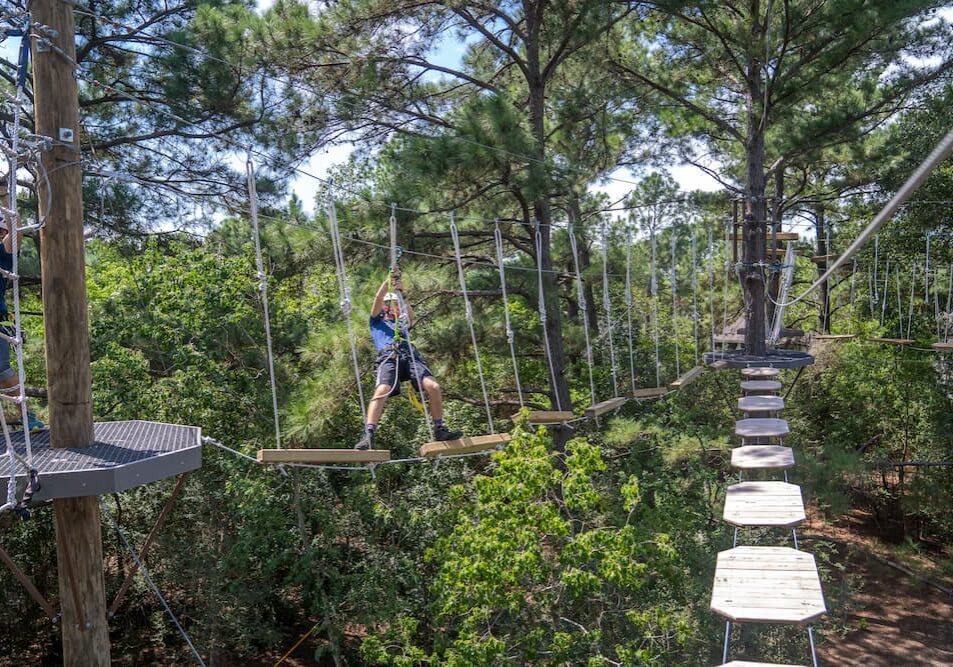
Looking down from the starting perch of the canopy trail challenges, the ground turns into a patchwork of sandy pathways and dwarf palmettos. The park divides its elevated runs into structured tiers, moving from entry-level footbridges to taxing technical traverses that demand upper-body endurance.
The lower tiers rest approximately 15, 20 feet above ground level, presenting wide balance beams, stabilized rope nets, and short zip transfers. These initial lines teach balance while letting novices acclimate to the sway of suspended cables. Once climbers move into the upper canopy circuits, reaching heights up to 40 feet, the physical stakes jump. Footings narrow down to swinging wooden stirrups, rolling logs, and slack lines that drift with every step.
The highlight for many is the uninterrupted zipline canopy tour segments. Riders launch from enclosed wooden decks, slicing through natural tree corridors before catching gravity-dampening catch nets on opposing terminals. Wind rushes past at speeds topping 25 miles per hour, delivering expansive views of local creeks and forest canopies rarely visible from public hiking trails.
| Experience Tier | Canopy Elevation | Physical Difficulty | Key Challenges & Features |
|---|---|---|---|
| Ground Games & Axes | 0 Feet (Ground Level) | Low | Axe throwing cages, cornhole, shaded picnic bases |
| Introductory Canopy Trail | 12, 18 Feet | Moderate | Wobbly bridges, rope ladders, short training ziplines |
| Advanced Aerial Ropes Course | 25, 40 Feet | High | Swinging stirrups, suspended cargo nets, long-line canopy runs |


