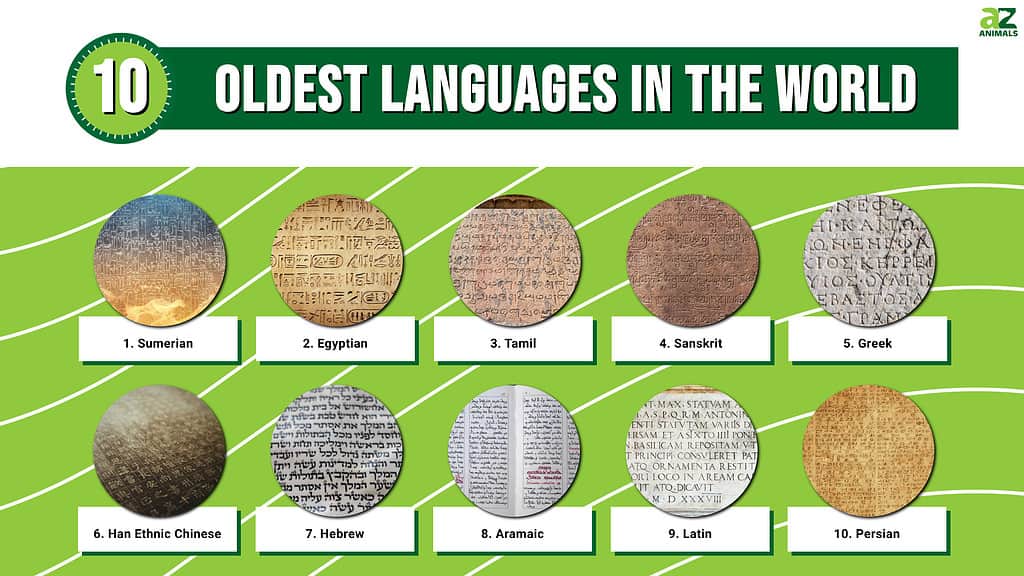
Online arguments over which language came first rarely concern cuneiform or hieroglyphic tax seals. Instead, they center on living linguistic traditions: specifically the antiquity of Tamil and Sanskrit. Separating patriotic pride from empirical linguistics requires understanding that spoken speech does not leave a physical geological footprint.
Anatomically modern humans possessed the hyoid bone, cranial base structure, and FoxP2 gene variants necessary for complex speech at least 100,000 to 150,000 years ago. That reality makes every living language family, from Afroasiatic and Indo-European to Dravidian and Sino-Tibetan, the modified descendant of deep prehistoric lineages. No language is genetically older than any other; they have simply had different portions of their timelines preserved in stone.
Sanskrit antiquity rests on the rigorous oral transmission of the Rigveda, composed in northwestern South Asia between 1500 and 1200 BCE. The hymns were deliberately memorized through metric recitation systems so precise that phonetic drift was virtually eliminated across millennia. Despite this extraordinary oral antiquity, the earliest surviving *written* Sanskrit inscriptions, such as the Junagadh rock inscription of Rudradaman, date only to the 2nd century CE.
Tamil language origins present a parallel dynamic. Classical Tamil boasts continuous literary expression dating through the Sangam era. Recent excavations at Keezhadi in Tamil Nadu uncovered pottery sherds bearing Tamil-Brahmi scripts, with carbon-dated layers reaching approximately 580 BCE. While this provides concrete archaeological proof of early literacy in South India, it remains millennia younger than Mesopotamian clay tablets. Spoken Tamil and Sanskrit are ancient, yet their written artifacts cannot compete with the sheer chronological head-start of the ancient Near East.