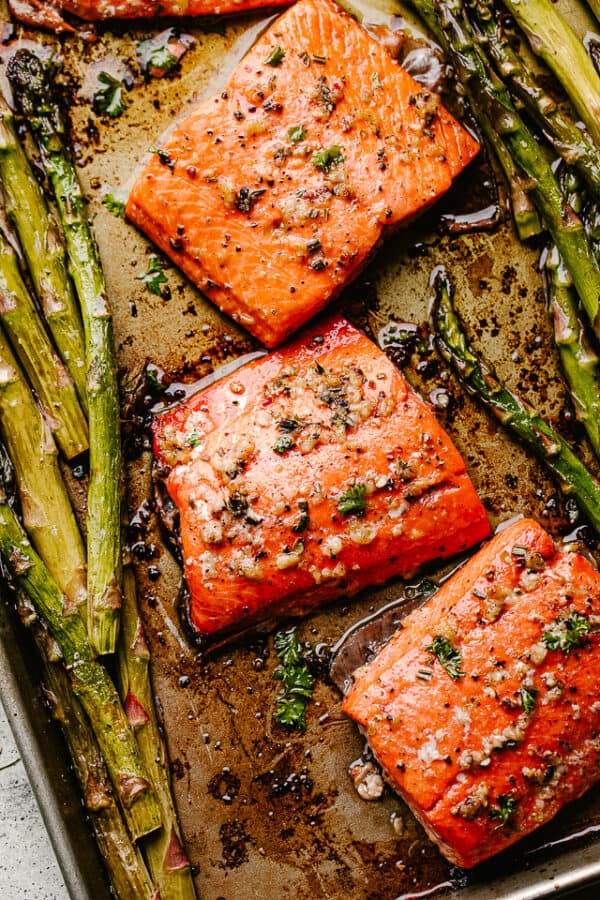
Because sockeye carries less natural fat through the center of its flesh, topping a baked wild salmon fillet with an external fat layer yields exceptional results. The most celebrated preparation among Pacific Northwest chefs blends roasted hazelnuts, local honey, and Dijon mustard.
To prepare the honey hazelnut crust, toast half a cup of raw hazelnuts in a dry skillet, rub off the skins with a clean kitchen towel, and pulse them in a food processor with coarse sea salt, cracked black pepper, and fresh thyme leaves. Paint the top of a skin-on sockeye side with a balanced emulsion of one tablespoon Dijon mustard and two teaspoons raw clover honey. Press the chopped hazelnut crumb across the mustard glaze. Bake at 375°F (190°C) for roughly 9 to 11 minutes. The hazelnut oil bastes the wild meat while the mustard traps internal moisture, yielding tender flakes beneath a nutty crunch.
For a classic profile, a garlic herb butter crust functions similarly. Soften three tablespoons of unsalted butter, folding in two minced garlic cloves, chopped Italian parsley, fresh tarragon, lemon zest, and a pinch of panko crumbs. Smear the herb butter over the fish just before roasting. The butter slowly melts across the grain of the meat during cooking, preventing dry salmon without masking its distinctive wild taste.