
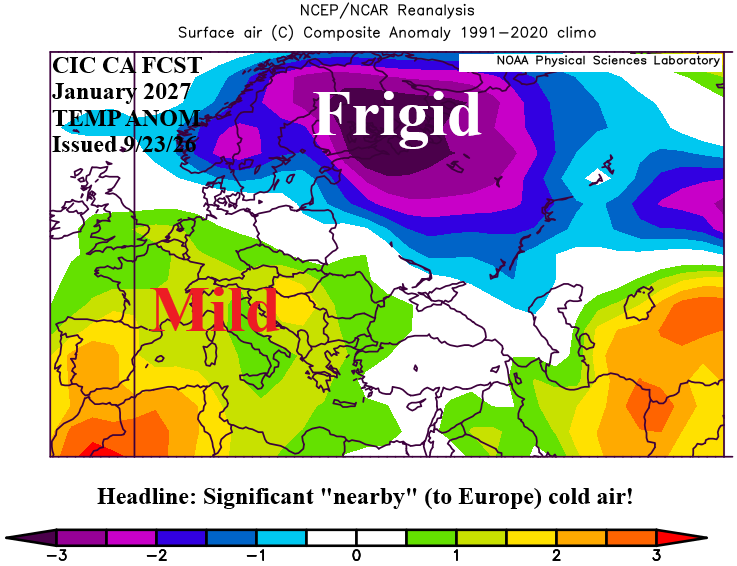
Public discourse often conflates warmer seasonal forecasts with an absence of snow. In sub-polar and continental climates, the opposite frequently occurs. Extreme Arctic air holds very little moisture; when temperatures sink below -25°C, the air column dries out, producing crystal clear skies and minimal new accumulation.
Warm winter weather anomalies in 2026 introduce a surplus of atmospheric vapor. An atmosphere that sits just a few degrees below freezing can hold significantly more water vapor than an Arctic air mass. Consequently, when Atlantic depressions charge across European borders, they encounter just enough residual surface chill to yield high-volume blizzards.
Rather than skipping snowfall entirely, cities in Western Russia are poised to see heavier, wetter single-event snow accumulations. A 2°C temperature bump in an environment that remains between -4°C and -1°C does not create rain. It creates dense, heavy snowpacks that place severe mechanical stress on electrical grids, building roofs, and highway maintenance crews.


