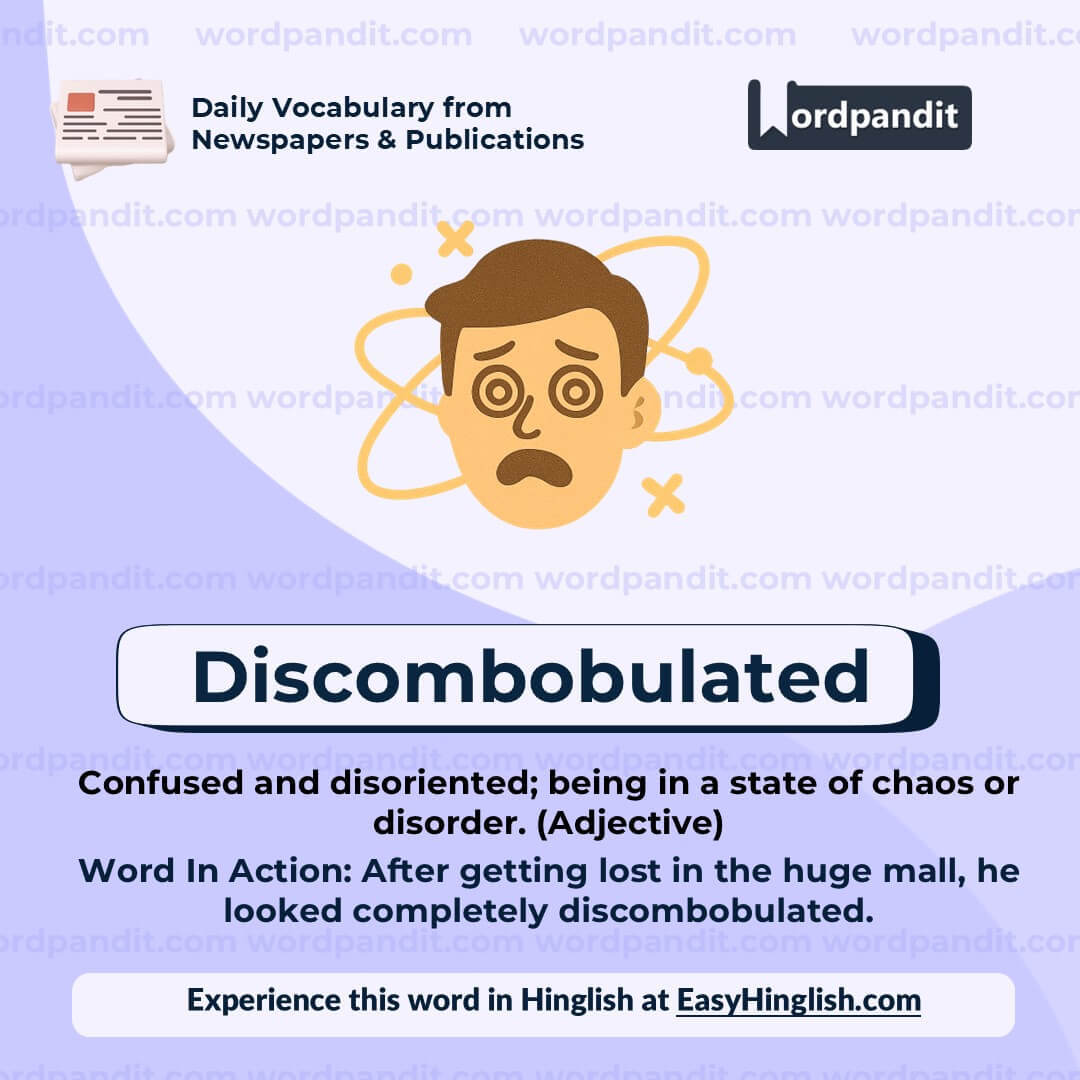
Q1: What is the exact phonetic pronunciation of "discombobulate"?
A1: In standard American English, it is pronounced dis-kuhm-BAH-byuh-layt (/ˌdɪs.kəmˈbɑː.bjə.leɪt/). In British English, it leans toward dis-kuhm-BOB-yuh-layt (/ˌdɪs.kəmˈbɒb.jʊ.leɪt/), placing primary stress on the third syllable ("bob").
Q2: Is "recombobulate" an official word in standard dictionaries?
A2: "Recombobulate" originated as a humorous back-formation, created by removing the negative prefix "dis-" and replacing it with "re-". While absent from historical British lexicons, modern American authorities like the American Heritage Dictionary now document it as informal humorous usage, largely catalyzed by Milwaukee Airport's famous security signage.
Q3: How does discombobulation differ from cognitive dissonance?
A3: Cognitive dissonance is a psychological term describing psychological distress caused by holding two contradictory beliefs simultaneously. Discombobulation is a broader, subjective experience of mental clutter, dizziness, disorientation, and disruption to one's focus.
Q4: Is "discombobulate" considered formal English or professional jargon?
A4: The word remains informal and conversational. While widespread in serious journalism, personal essays, and spoken discourse, it should generally be avoided in technical scientific papers, legal contracts, and statutory documents, where terms like "disorient," "disconcert," or "disorganize" are preferred.