
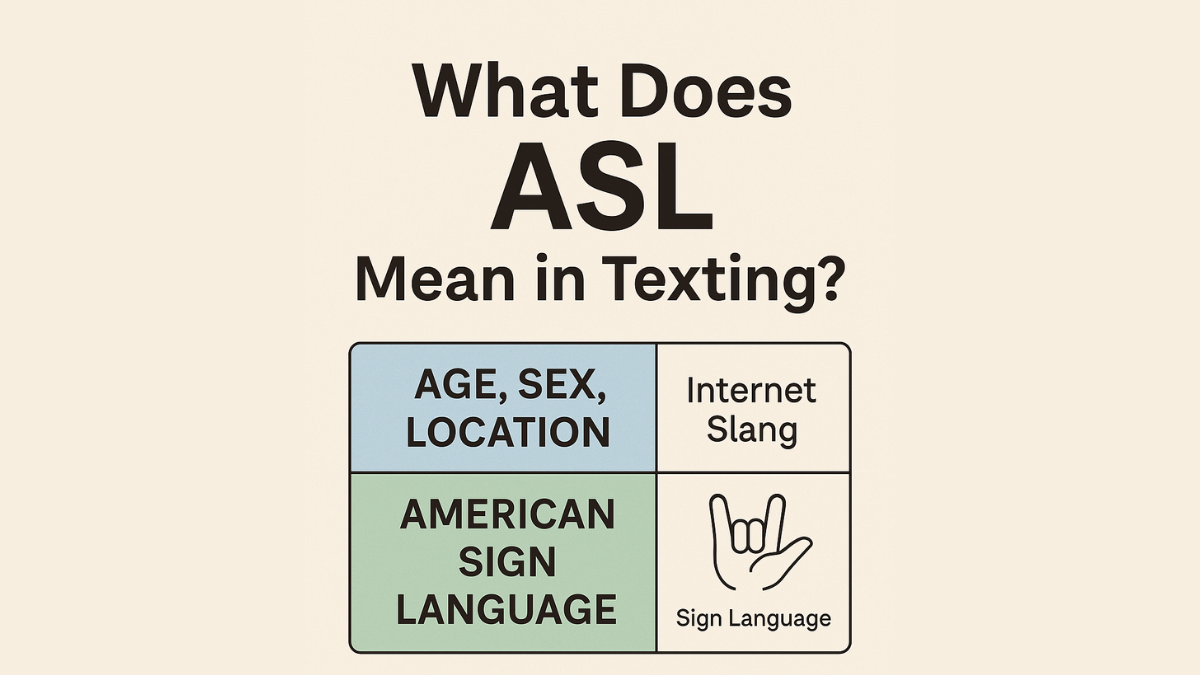
Because identical letter groupings carry conflicting definitions, textual syntax functions as the primary disambiguation engine. Readers can parse the intended meaning without asking for clarification by watching three structural indicators:
- Positioning within the sentence: If "asl" appears at the tail end of an adjective, such as "mad asl," "funny asl," or "cold asl", it always means "as hell." If it stands by itself as a single prompt, it evokes the vintage demographic query.
- Punctuation and capitalization: The presence of forward slashes (`a/s/l`) points to the 1990s chat inquiry. Full capitalization without punctuation (`ASL`) alongside verbs like "learn," "study," or "translate" points to American Sign Language.
- Conversational tone: Professional, clinical, or institutional environments never use the TikTok abbreviation. As demonstrated by European municipal health communications, official notifications will accompany the acronym with reference codes, clinic addresses, or portal URLs.


