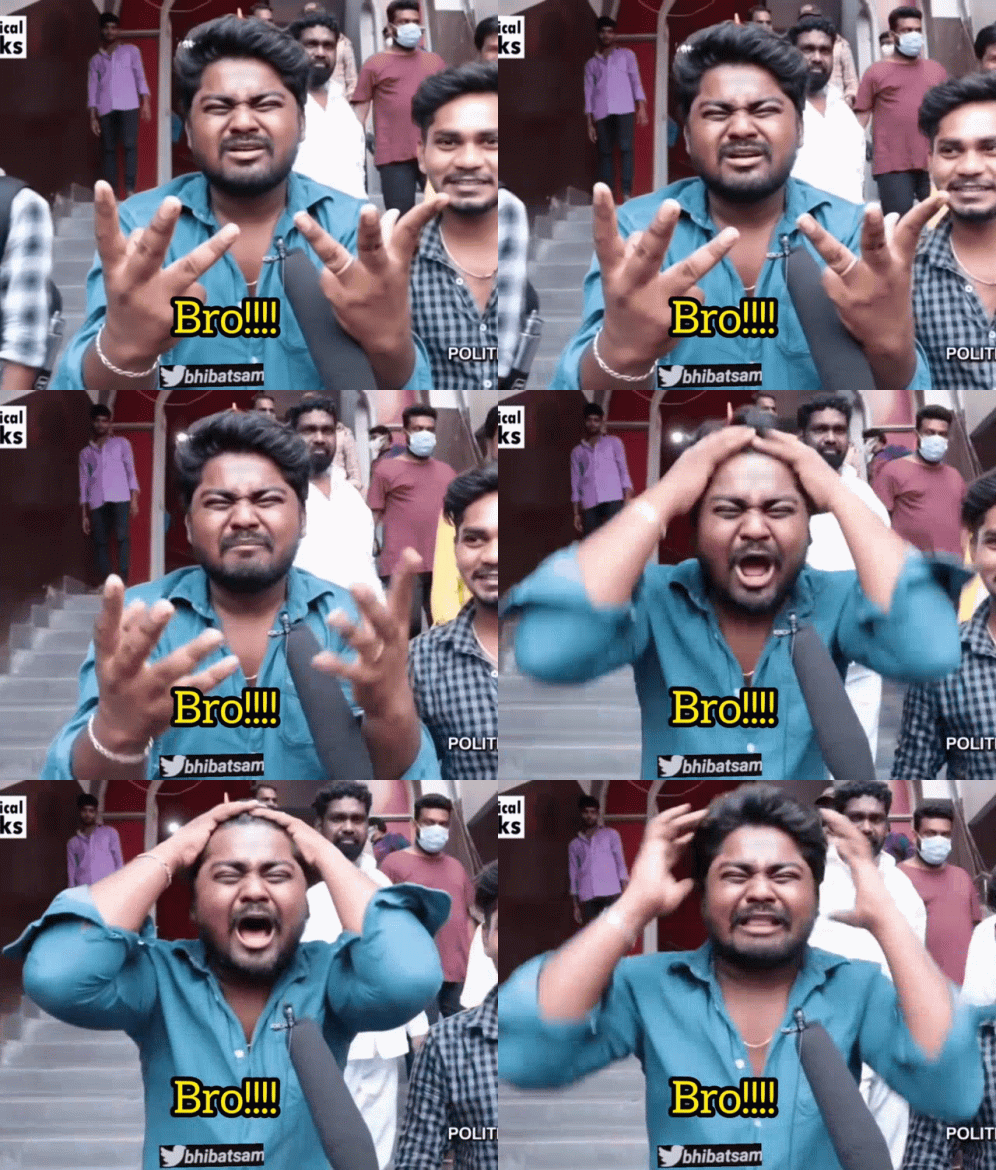
If modern German has an undisputed champion for the title of "bro," it is Digga (frequently spelled Dicker, Dikka, or Digger). Listen to youth conversations in any German city, and you will hear it punctuate the beginning, middle, and end of sentences. Yet despite its contemporary association with Gen Z internet culture, the term has roots that go back well over a century.
The Hamburg slang Digga origin stems from Low German (Plattdüütsch), specifically the phrase Dicker Mann (literally "fat man" or "thick man"). In the working-class port districts of 19th-century Hamburg, dockworkers used Dicker as an affectionate greeting for a close comrade, carrying roughly the same colloquial weight as calling someone "big guy" or "stout partner." As phonetics softened in northern urban speech, the hard consonant faded, yielding the modern pronunciation [ˈdɪɡa].
The term stayed largely confined to Northern Germany until the late 1990s. Pioneering hip-hop crews like Hamburg's Beginner (formerly Absolute Beginner) and Dynamite Deluxe brought northern street cadence into mainstream youth culture. From there, reality television and social platforms broke down remaining regional barriers. Today, Digga functions in two distinct ways: as a direct address ("Was geht, Digga?", "What's up, bro?") and as a marker of disbelief or exasperation ("Digga, das kann nicht wahr sein!", "Bro, that cannot be true!").