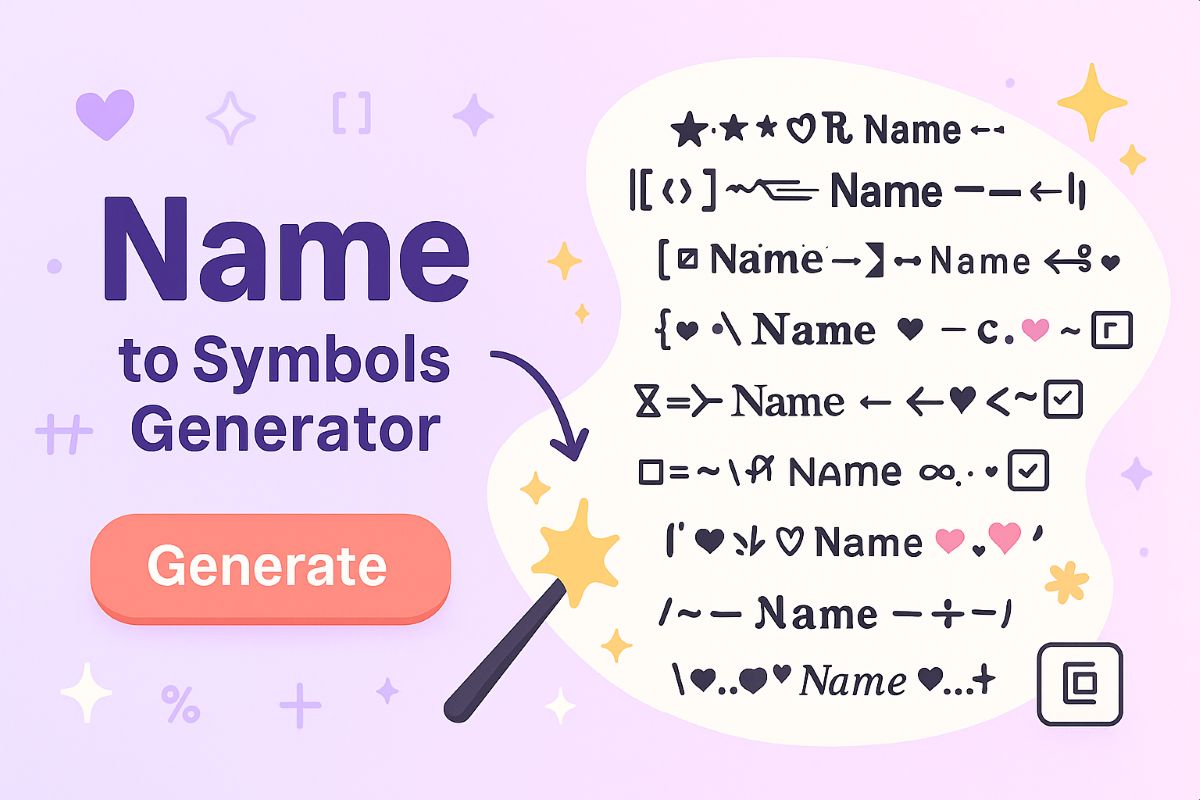
While customized typography stands out visually, it creates serious accessibility barriers behind the scenes. Web accessibility research consistently highlights the disruptive impact of pseudo-fonts on assistive technology. Screen readers such as NVDA, JAWS, and Apple VoiceOver do not interpret mathematical script characters as decorative formatting. They parse them according to their official Unicode definitions.
Consider a profile displaying the name "𝓒𝓪𝓻𝓵" crafted using Mathematical Bold Script characters. A standard user sees a stylish, cursive rendition of the name Carl. To an assistive screen reader, however, that four-letter word is voiced phonetically as: "Mathematical Bold Script Capital C, Mathematical Bold Script Small A, Mathematical Bold Script Small R, Mathematical Bold Script Small L." What takes half a second to read visually becomes a confusing, five-second audio obstacle for visually impaired users. When handles incorporate dense combining marks or vertical ASCII text art, screen readers can lock up entirely or emit endless strings of unintelligible gibberish.
The secondary risk is algorithmic invisibility. Platform discovery architectures, including search bars on Instagram, TikTok, and YouTube, rely heavily on standard ASCII character strings to match queries. If your public handle uses gothic letters or obscure mathematical substitutes, potential followers searching for your name using a standard phone keyboard will not find your profile. The platform's search index evaluates "David" and "𝔇𝔞𝔳𝔦𝔡" as completely unrelated character sequences. If discoverability matters for your channel or brand, isolating complex typography to the bio description, rather than the primary username or handle field, is essential.