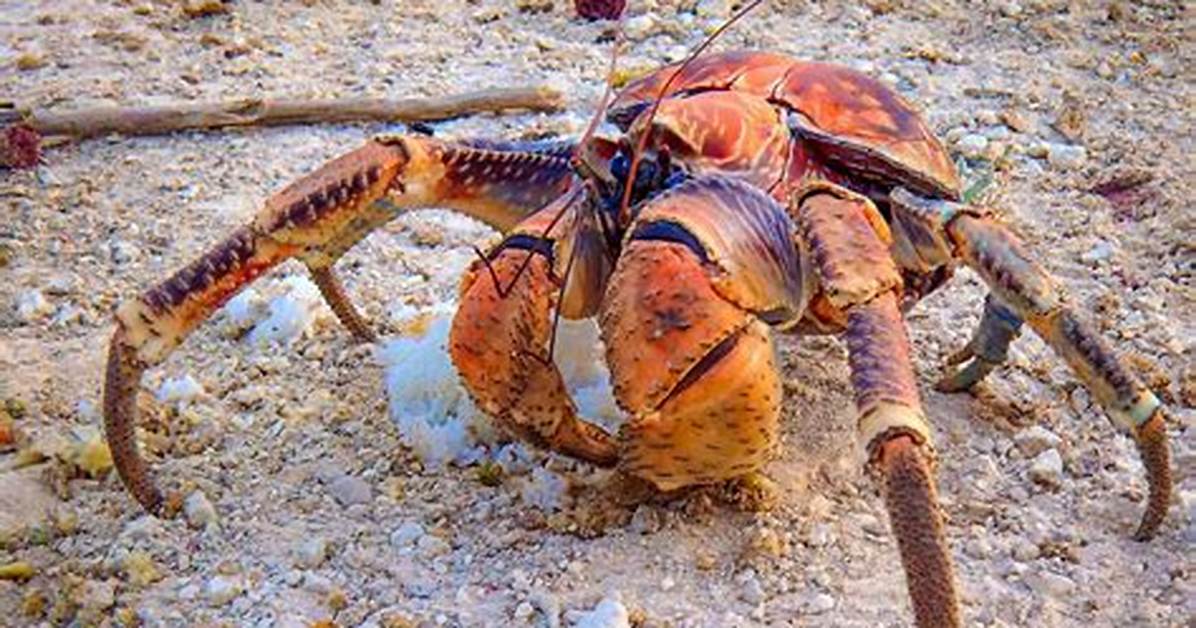
Public perceptions of Birgus latro are colored by grim folklore, none more persistent than the theory that giant robber crabs devoured aviation pioneer Amelia Earhart after she disappeared over the central Pacific in 1937.
The hypothesis gained traction through expeditions by The International Group for Historic Aircraft Recovery (TIGHAR) to Nikumaroro, an uninhabited coral atoll in Kiribati. Researchers documented that coconut crabs maintain an acute olfactory sense, quickly tracking the scent of carrion across considerable distances. Experimental trials using pig carcasses confirmed that a dense population of coconut crabs can pick a body clean and scatter skeletal remains across a forest floor within weeks.
Scavenging behavior is undisputed biology; hunting live adult humans is fiction. Birgus latro moves slowly on open ground and avoids confrontations with large, mobile animals. While a marooned castaway succumbing to injury or dehydration would certainly be scavenged by resident crabs, claims that aggressive swarms overpowered Earhart remain sensationalized embellishments. Anthropological reviews of the 13 skeletal bones recovered from Nikumaroro in 1940 remain inconclusive, leaving the crab-attack narrative firmly in the realm of unproven lore.