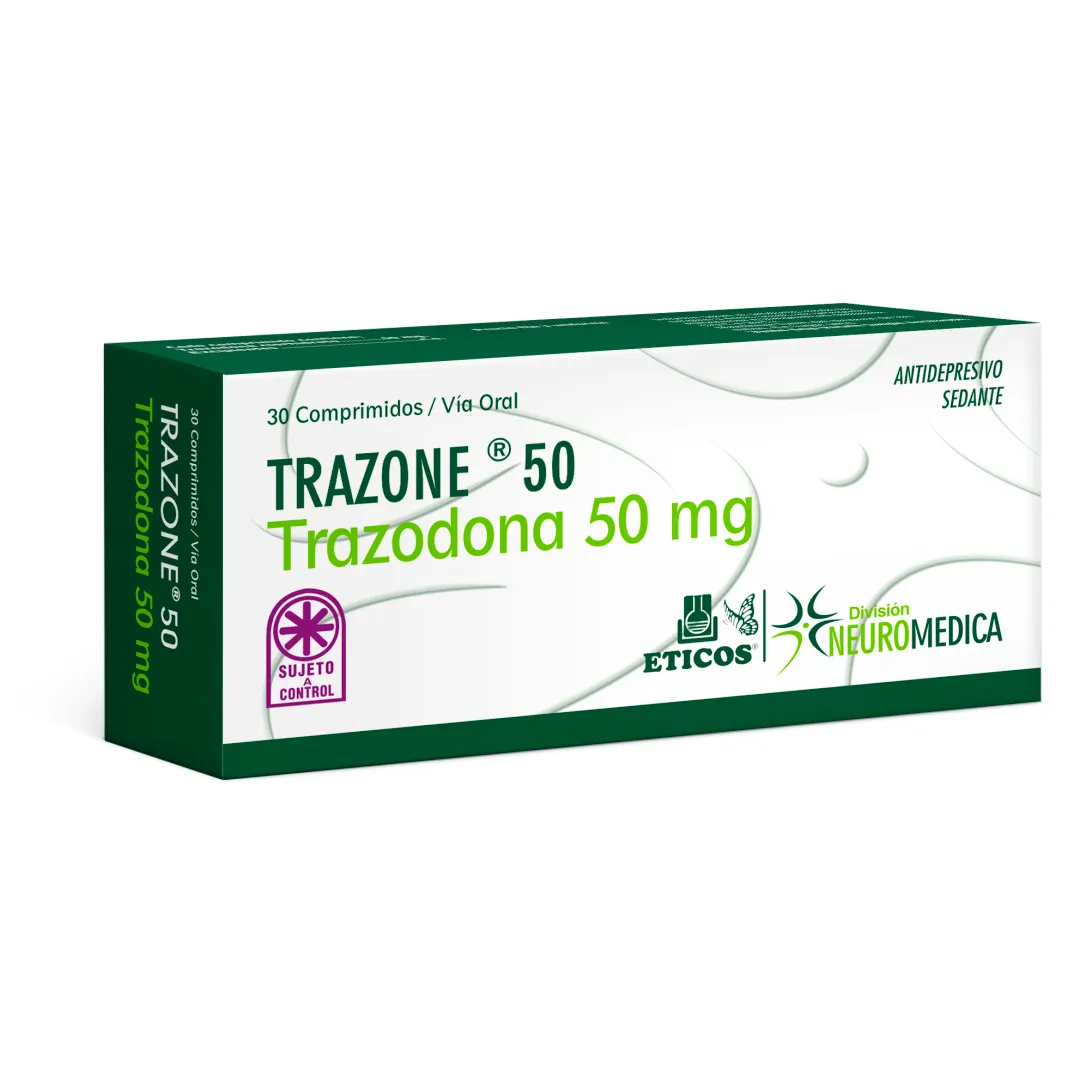
The most frequent patient complaint in clinical practice is not insomnia failure; it is the inability to wake up cleanly. Data shows between 20% and 40% of patients experience prominent sedation and daytime grogginess the following morning.
Trazodone carries an elimination half-life of roughly 5 to 9 hours (averaging 7.3 hours). If a patient takes 50 mg at 11:00 PM and awakens at 6:30 AM, an active concentration of the parent molecule remains circulating through their bloodstream. Compounding this, the liver metabolizes trazodone via the cytochrome P450 3A4 (CYP3A4) enzyme system into an active metabolite called meta-chlorophenylpiperazine (mCPP).
Unlike trazodone, mCPP is actually a serotonin agonist that can promote wakefulness, headaches, and anxiety. The erratic ratio between parent drug clearance and mCPP accumulation explains why some users report profound sluggishness while others wake up early with racing thoughts and tension. Consuming high-fat meals shortly before swallowing the tablet increases peak plasma concentration by up to 20%, delaying the drug's absorption window and pushing peak sedation well into morning commute hours.