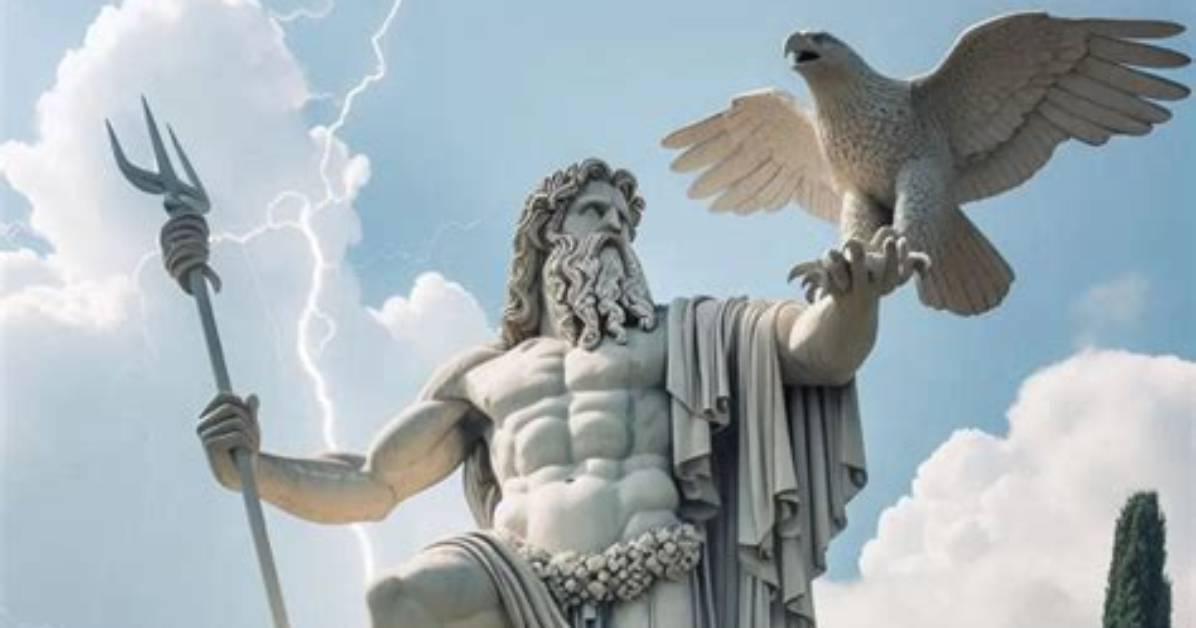
The concept of a Zeus hourglass owes its intuitive appeal to ancient linguistic confusion. Classical myth features two entirely different entities whose names sound almost identical to modern ears: Kronos, the Titan ruler and father of Zeus, and Chronos, the primeval personification of time.
In archaic thought, Kronos had nothing to do with ticking seconds. He was an agricultural deity wielding an adamantine sickle, the youngest child of Gaia and Uranus. By the 4th century BCE, philosophical writers and early Hellenistic scholars began treating the two figures as one through homophonic wordplay. The philosopher Plutarch and later Roman commentators cemented this conflation, turning Kronos (Saturn in Rome) into an elderly patriarch governing time itself.
When medieval and Renaissance illustrators revived Saturn-Chronos, they handed him two iconic objects: his ancient sickle and a modern hourglass. This created the archetype of "Father Time." Modern digital storytellers take this syncretism one step further. By passing the hourglass from Chronos to his triumphant son, Zeus, they frame the object as a trophy of war. In this reading, Zeus did not just overthrow the Titans; he wrested control of temporal flow from his father.