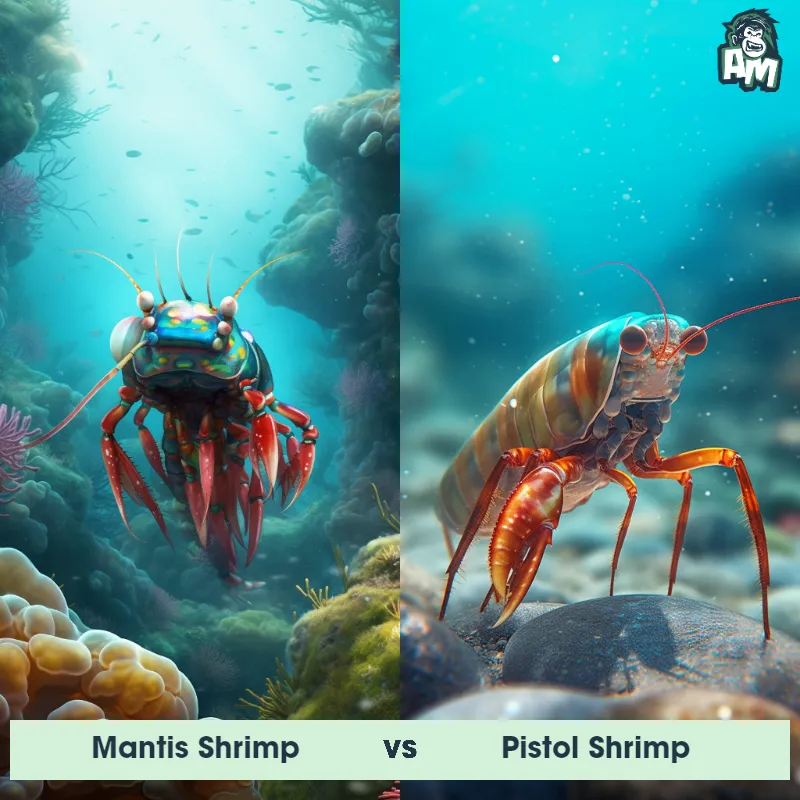
Comparing these two biological engines requires breaking down their kinetic output across direct force, fluid velocity, and acoustic generation. Both organisms display extreme specialization within the limits of biological materials.
| Physical Metric | Peacock Mantis Shrimp | Alpheus Pistol Shrimp |
|---|---|---|
| Primary Weapon | Calcified Dactyl Club (Smasher) | Plunger-Socket Snapping Claw |
| Appendage Velocity | 12, 23 m/s (Appendage strike) | 25, 32 m/s (Claw closure speed) |
| Water Acceleration | 10,000, 12,000 g | 20,000, 30,000 g (At nozzle orifice) |
| Peak Impact Force | 1,500 N (~337 lbf direct contact) | Negligible direct contact (<5 N) |
| Acoustic Energy | 160, 180 dB re 1 µPa | 210, 225 dB re 1 µPa |
| Attack Range | 0, 5 millimeters (Point-blank impact) | 10, 40 millimeters (Ranged shockwave) |
| Cavitation Role | Secondary damage amplifier | Primary offensive payload |
As highlighted in a Forbes biology profile on extreme strike forces, the mantis shrimp hits with the kinetic punch of a .22 caliber round. By focusing that energy into a microscopic contact surface over 50 microseconds, it shatters reinforced aquarium glass. The pistol shrimp, meanwhile, dominates acoustic output. Its collective snaps disrupt submarine sonar across shallow tropical waters.