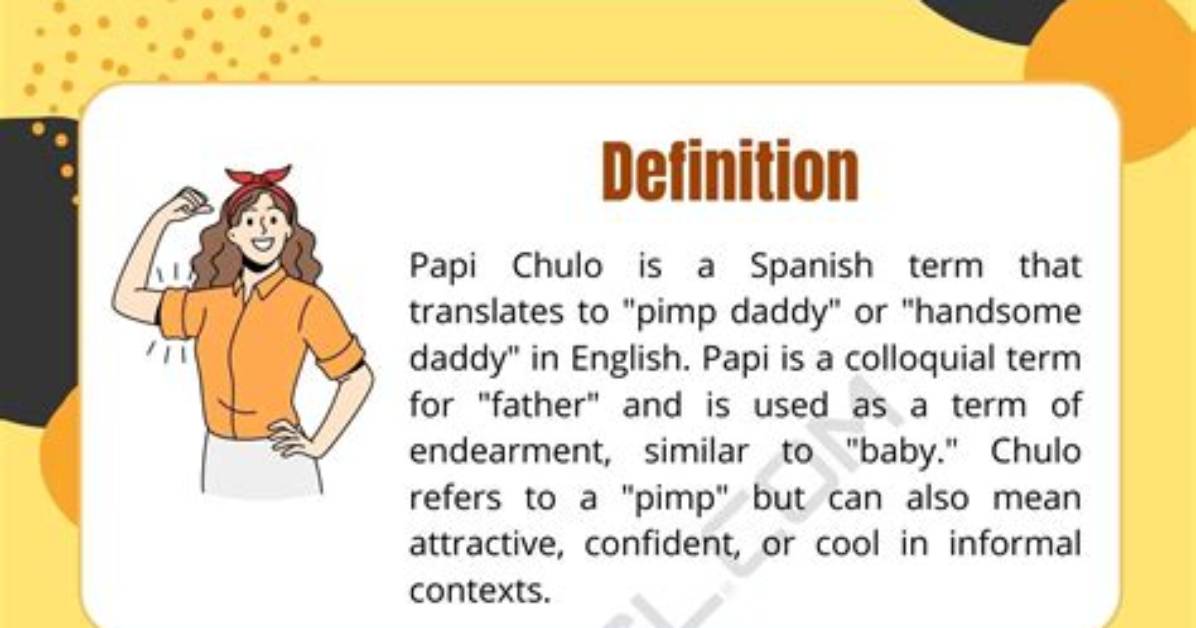
Breaking the phrase into its two building blocks reveals why it carries such layered social weight across Latin American colloquialisms. The noun papi derives directly from the Latin pater through Spanish papá. In Caribbean Spanish origins, particularly in Puerto Rico, Cuba, and the Dominican Republic, speakers routinely use kinship terms for romantic partners, casual friends, and young children. Calling an attractive man papi functions identically to calling someone "baby" or "honey" in American English. It does not carry paternal or incestuous overtones in everyday street speech.
The adjective chulo holds a far more erratic history. Originating in the Iberian Peninsula, chulo historically referred to Madrid street toughs or working-class dandies known as chulapos during the 19th century. In contemporary Castilian Spanish, the word retains dual lives: describe an object as chulo and you mean it looks pretty or neat; call a person a chulo, and you might accuse them of being a pimp or an unbearable smart-aleck. Across the Atlantic, Caribbean communities softened the edges. Puerto Rican and Dominican speakers repurposed the word into a casual marker for physical beauty, charm, and snappy dressing.