
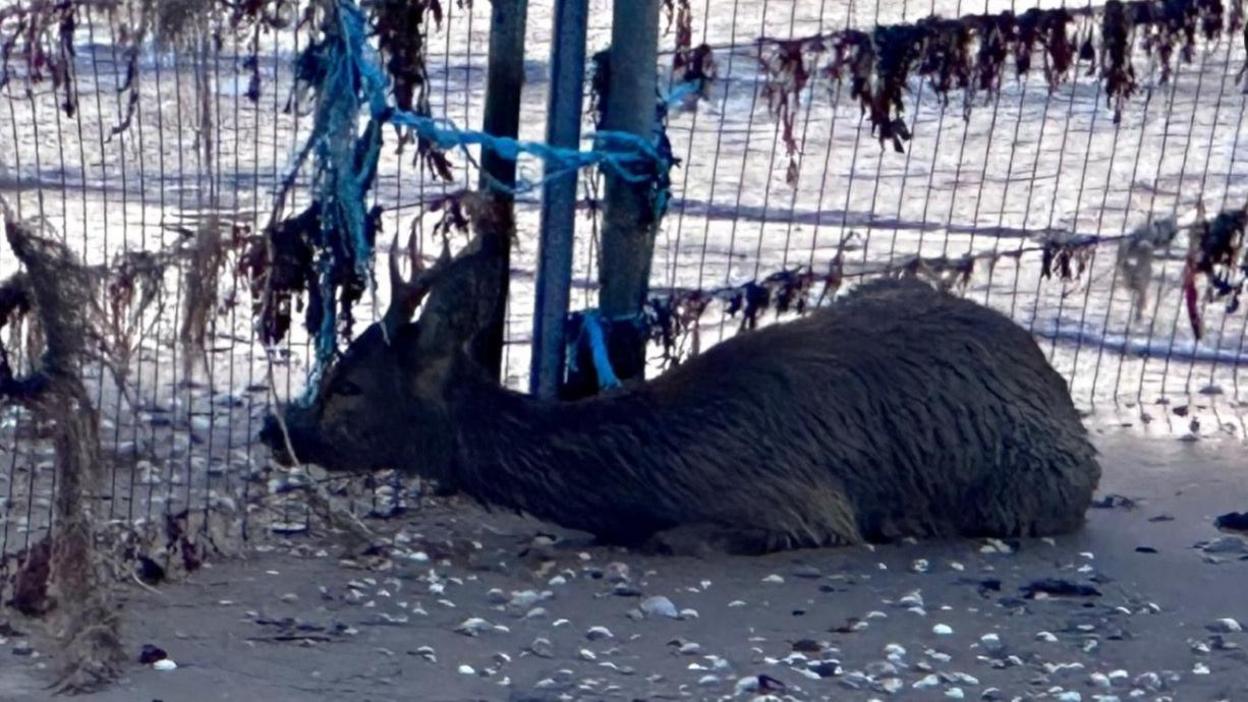
The lighthearted reaction online ignored a grim ecological reality: actual petroleum exposure is catastrophic for terrestrial mammals. While oil spill coverage typically focuses on seabirds and marine life, ungulates encounter hydrocarbons during pipeline ruptures, leaking wellheads, and unmonitored holding basins in oil patch regions across Texas, Alberta, and North Dakota.
When crude coats an animal, it destroys the insulating properties of the pelage. Fur keeps deer warm by trapping an envelope of still air against the dermis. Hydrocarbons collapse this boundary. Even in mild temperatures of 50°F to 60°F (10°C, 15°C), an oiled animal faces rapid hypothermia. Grooming compounds the damage. Deer use their incisors and tongues to clean their coats, ingesting toxic polycyclic aromatic hydrocarbons (PAHs) that burn the esophageal lining and precipitate acute renal failure within 48 to 72 hours.
Field data from regional spills shows that ungulates caught in holding ponds or slush pits rarely look like glistening, majestic figures walking calmly through trees. They present as distressed, shivering, and heavily matted casualties unable to regulate body temperature or flee predators.


