The choice between spackle and drywall mud comes down to span, depth, and structural movement. Field trades follow strict triage rules on site to balance labor speed against long-term bond strength.
For minor indentations, nail holes, and scuffs under 0.5 inches in diameter, spackle is the undisputed standard. Its rapid evaporation time allows a painter to apply a dab, wait 20 to 30 minutes, sand flush with fine-grit abrasive, and apply primer on the same afternoon. Modern lightweight spackles resist sagging, meaning they rarely require a second coat on standard fastener punctures.
Full-scale wall construction and large restorations demand joint compound. When hanging fresh boards, finishing corner beads, or embedding joint tape, nothing replaces true mud. All-purpose drywall mud contains adhesives formulated to grip drywall tape, establishing a unified structural plane across adjoining sheets. It also allows feathering edges, tapering the compound out 10 to 14 inches past the center seam so the joint disappears completely under natural lighting. Spackle cannot feather out over wide spans without creating brittle, powdery margins that tear when primed.
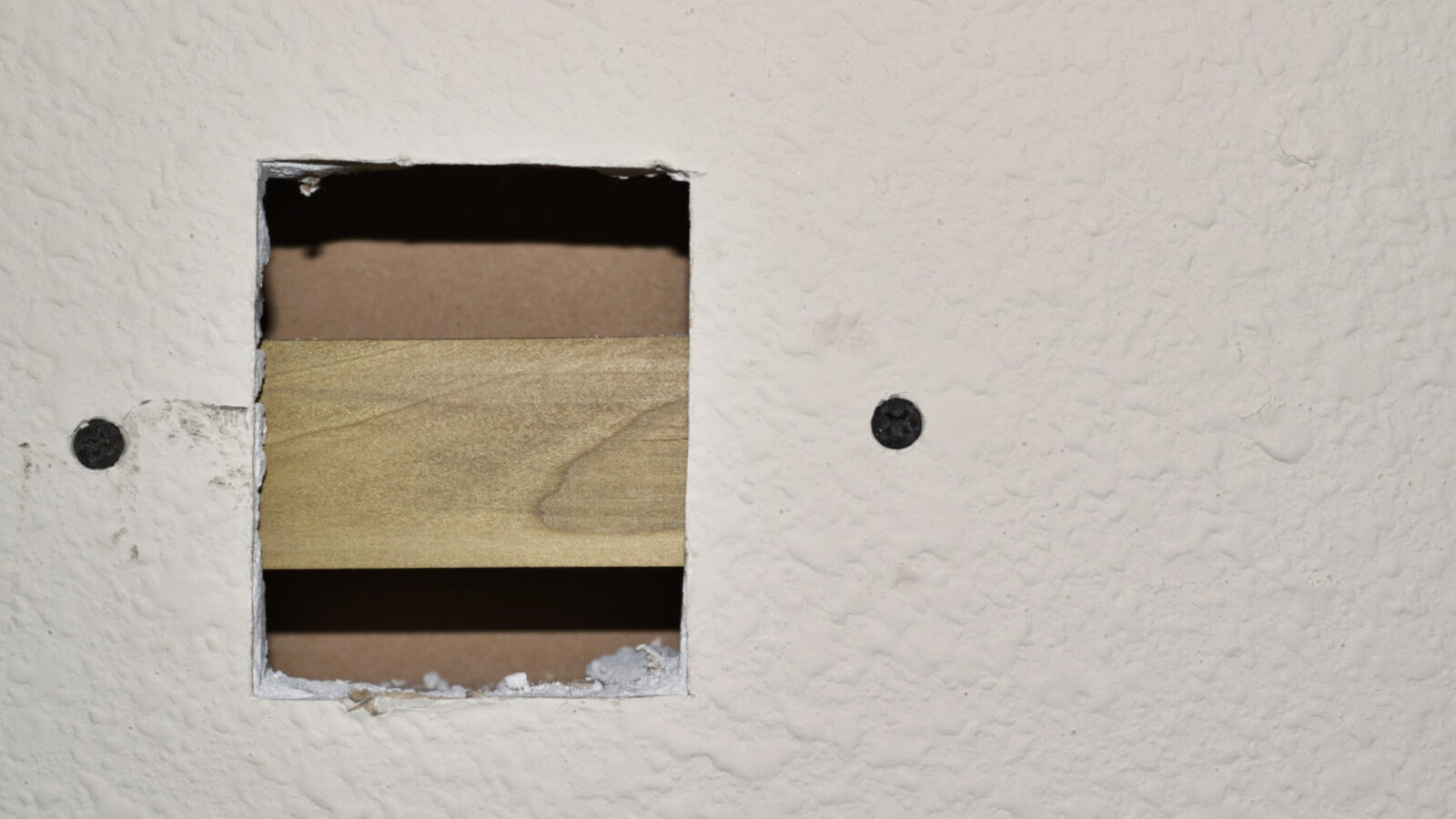
When dealing with plumbing cuts or door handle damage, a drywall repair patch requires both products in sequence. Pros use setting-type compound or standard mud to tape the new gypsum backing board into place, then switch to a topping formula or fine patch paste for the final cosmetic skim.