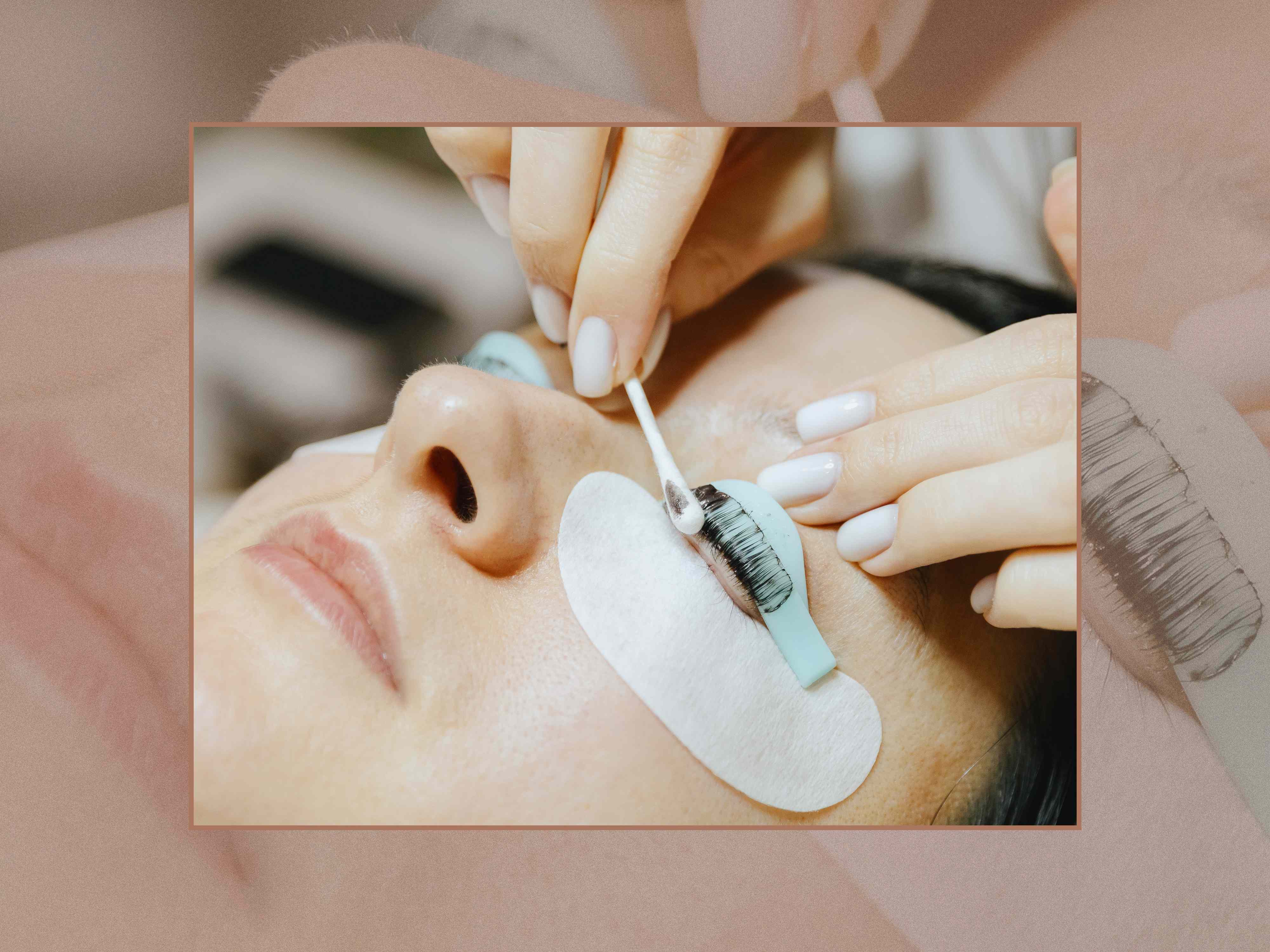
Understanding the distinction between an old-school lash perm vs lash lift requires looking directly at sulfur bonds within human hair. Traditional lifting formulas utilize ammonium thioglycolate (TGA). This compound aggressively rips open the hair’s disulfide bonds, softening the cuticle rapidly so it can be forced into a curled shape over a cylindrical roller. If left on the eye for even two minutes too long, TGA fries hair tips, creating brittle, singed edges that take months to grow out.
The Korean approach replaces thioglycolic acid with cysteamine hydrochloride. Cysteamine is an organic compound derived from the amino acid cysteine, which natively exists in human keratin. Instead of blasting the cuticle open, cysteamine gently softens disulfide cross-links through mild hydrogen restructuring. The chemical works at a substantially lower pH level, hovering around 7.0 to 8.2, compared to traditional perm lotions that frequently exceed a harsh 9.5 pH.
Because cysteamine mimics biological hair proteins, the risk of over-processing drops dramatically. Estheticians can leave the solution on fine or compromised hairs without singeing the tips. The lifting step is paired with a keratin lash infusion, which floods the porous hair shafts with hydrolyzed wheat proteins, plant ceramides, and panthenol. This infuses the hair fibers with structural support, preventing the parched, straw-like texture that historically plagued chemical perm treatments.