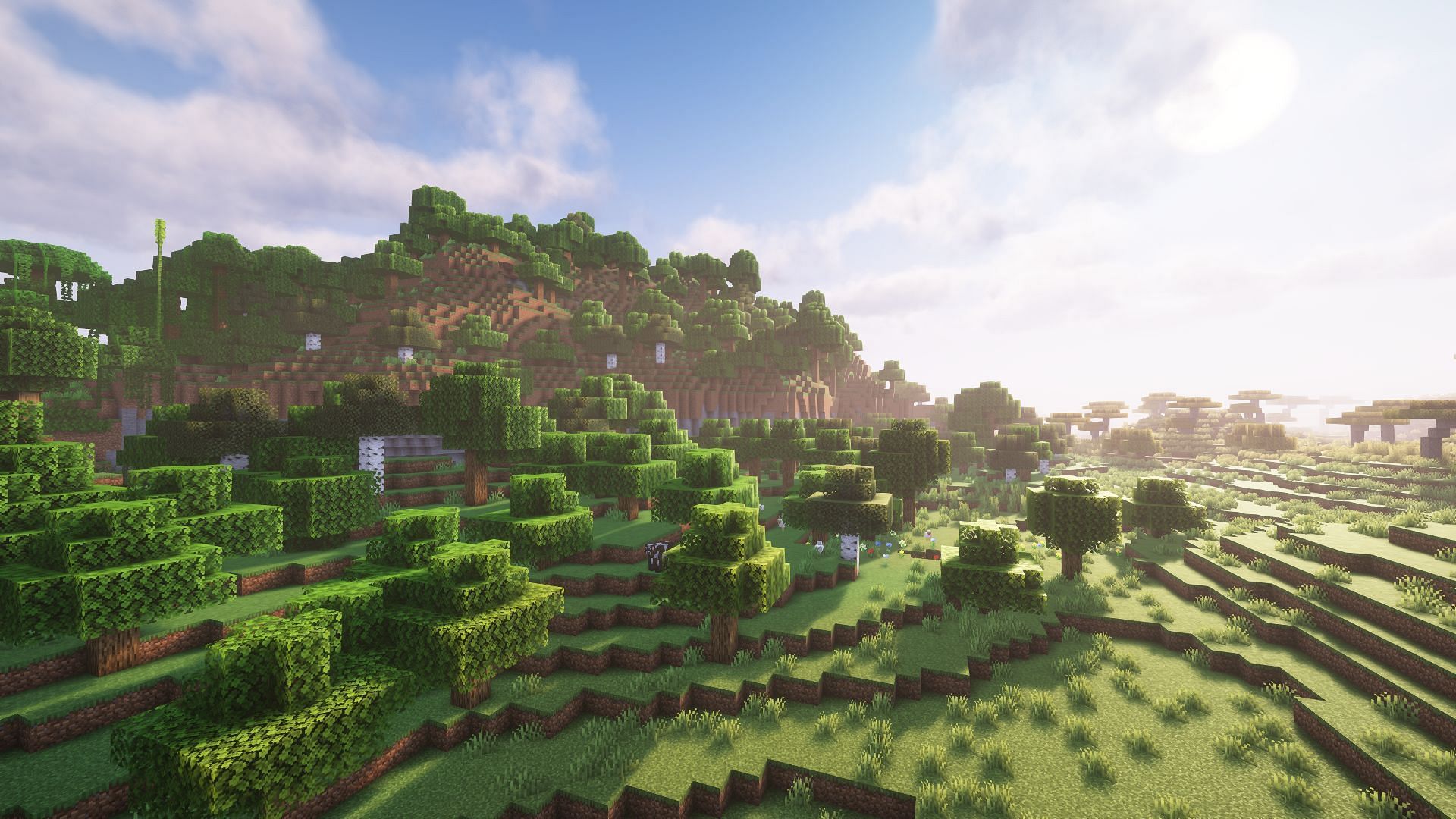
Complementary Unbound arrives preconfigured with an aggressive balance biased heavily toward static screenshots. Out of the box, the shader activates full-scene screen-space path tracing approximations, multi-layered water refraction, and real-time shadow cascading that evaluates every single block up to 16 chunks away. In testing on mid-tier hardware like an RTX 3060 or RX 6700 XT, this default configuration drives GPU utilization straight to 99%, generating frame times well north of 22 milliseconds.
The fundamental issue lies in how the shader handles layered calculations. When the game renders a scene, the engine first draws geometry, then applies lighting matrices, and finally runs post-processing buffers. Complementary Unbound stacks dense volumetric fog beneath real-time shadows, requiring your graphics card to redraw sunlight vectors through hundreds of microscopic coordinate slices. If you look across an open ocean or through a dense birch forest, your card renders thousands of invisible ray calculations per second. Halving those specific operations cleans up frame latency without blunting ambient atmosphere.