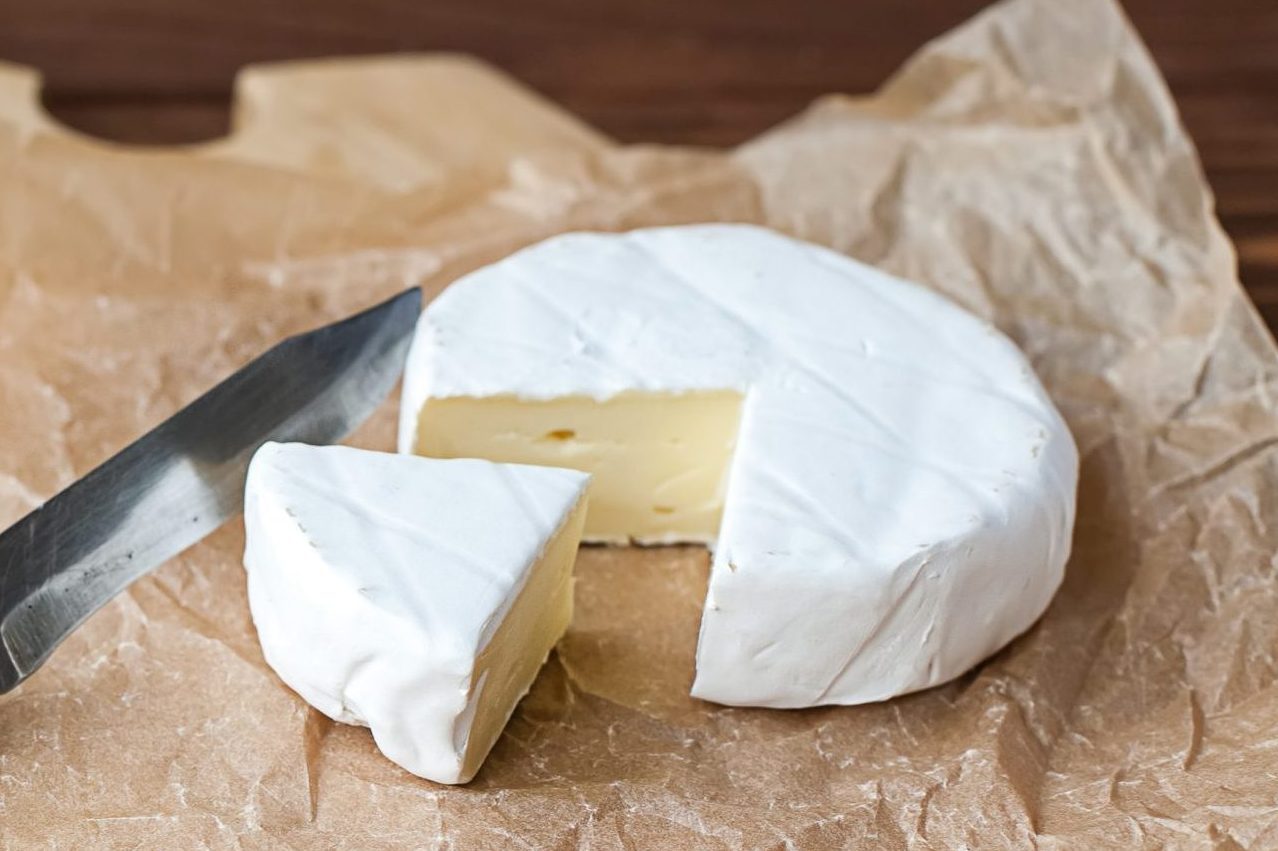
Diners frequently confuse Brie with Camembert, assuming both wheels share identical crust profiles. While both belong to the soft-ripened category and rely on identical mold strains, their historical development, milk volumes, and rind dynamics diverge considerably.
Brie originated in the Île-de-France region, historically molded in large wheels measuring 14 to 17 inches across. Camembert hails from Normandy and is cast into compact discs roughly 4.3 inches across. That size difference dramatically alters the surface-area-to-volume ratio, directly shaping how aggressively the mold transforms the interior paste.
| Cheese Style | Wheel Diameter | Rind Character | Flavor Profile | Fat Content (Dry Matter) |
|---|---|---|---|---|
| Brie de Meaux (AOP) | 14, 15 inches | Thin, white with reddish-brown streaks | Cultured butter, mushroom, damp earth | 45% |
| Industrial Commercial Brie | 8, 12 inches | Thick, chalky white, uniform felt | Mild cream, light lactic tang | 50%, 60% |
| Camembert de Normandie | 4.3 inches | Uneven white, brown pigment spots | Pungent brassica, wet straw, barnyard | 45% |
| Triple-Crème (e.g., Brillat-Savarin) | 5, 8 inches | Very thin, delicate white down | Whipped butter, fresh mascarpone | 75% |
Because Camembert features more rind relative to its internal volume, enzymatic activity occurs faster. The crust on Camembert tends to develop deeper mineral notes, funk, and vegetal undertones. Brie, having a larger distance from the outer crust to the dead center, ages more gradually, yielding a milder, sweeter flavor profile that appeals to palates sensitive to intense fungal funk.