
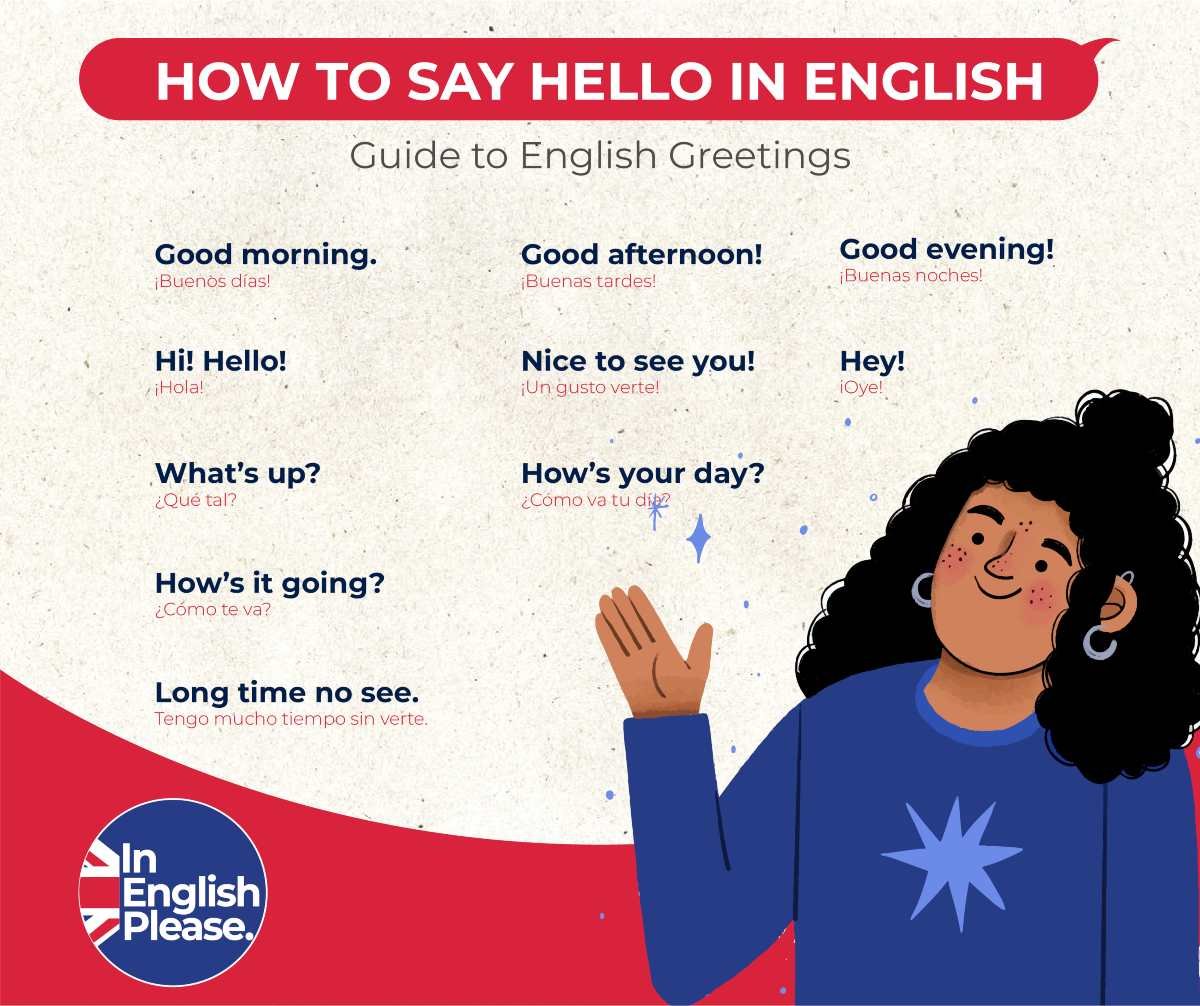
Here are the 25 essential English greetings categorized across daily social scenarios, complete with practical context and phonetic guidance.
Universal & Everyday Basics
1. Hello (/həˈloʊ/), The standard, baseline translation of "hola." Appropriate everywhere, from hotel receptions to doctor visits.
2. Hi (/haɪ/), The most common everyday greeting across the English-speaking world. Friendly, direct, and slightly less formal than "hello."
3. Hey (/heɪ/), Extremely common among acquaintances, friends, and colleagues of equal standing. Avoid using it with senior executives or strangers in high-formality settings.
Time-Bound Formal Greetings in English
4. Good morning (/ɡʊd ˈmɔːrnɪŋ/), Standard until 12:00 PM. Used in business meetings, hotel lobbies, and customer service.
5. Good afternoon (/ɡʊd ˌæftərˈnuːn/), Spanning from 12:00 PM to roughly 5:00 PM. Crisp, polite, and common in corporate presentations.
6. Good evening (/ɡʊd ˈiːvnɪŋ/), Deployed after 5:00 PM or sunset. It functions strictly as a greeting, whereas "good night" is reserved exclusively for parting or going to sleep.
Casual Slang Greetings and Street Expressions
7. What's up? (/wʌts ʌp/), Ubiquitous among younger speakers and close friends. Often shortened to "Sup." The standard reply is rarely a literal description; native speakers usually answer with "Not much" or "All good."
8. How's it going? (/haʊz ɪt ˈɡoʊɪŋ/), Blends a greeting with an open inquiry. Works smoothly at gym counters, neighborhood walks, and casual offices.
9. How are things? (/haʊ ɑːr θɪŋz/), An informal greeting alternative used when catching up with someone you have not seen in several weeks.
10. What's going on? (/wʌts ˈɡoʊɪŋ ɒn/), Relaxed, social, and common in group settings among peers.
11. Howdy (/ˈhaʊdi/), An iconic regional greeting deeply embedded in the American South and Southwest. Casual and friendly.
12. Yo (/joʊ/), Urban, high-energy slang. Reserved strictly for very close friends or creative, relaxed circles.
Professional Email Openings & Workplace Greeting Etiquette
13. Dear [Name] (/dɪər/), The traditional standard for formal cover letters, legal communications, or high-stakes business outreach.
14. Hi [Name], The undisputed workhorse of digital corporate correspondence in North America. Balances warmth with direct professionalism.
15. Good morning / afternoon, [Name], Professional email openings that establish a respectful tone for external clients or senior leaders.
16. Greetings (/ˈɡriːtɪŋz/), Useful when writing to an entire committee, an unnamed panel, or a customer support inbox.
Small Talk Starters & Inquiries
17. How are you doing? (/haʊ ɑːr juː ˈduːɪŋ/), A standard opening for workplace hallway chats or Zoom call waiting rooms.
18. How have you been? (/haʊ hæv juː biːn/), Designed specifically for acquaintances or colleagues you have not encountered recently.
19. Good to see you (/ɡʊd tuː siː juː/), Warm, affirming, and versatile. Works across both professional networking sessions and personal reunions.
20. Nice to meet you (/naɪs tuː miːt juː/), The non-negotiable standard for first-time introductions.
Regional British and Commonwealth Expressions
21. Alright? (/ɔːlˈraɪt/), The quintessential British greeting. Functions as both a question and a hello; the proper British response is simply repeating "Alright?" back.
22. Cheers (/tʃɪərz/), Primarily used in the UK, Australia, and New Zealand. While often a toast or a thank-you, it frequently opens and closes brief informal encounters.
23. G'day (/ɡəˈdeɪ/), The definitive Australian greeting, often paired with "mate."
Specialized Situational Greetings
24. Welcome (/ˈwɛlkəm/), The essential host greeting when receiving guests into your home, office, or event venue.
25. Long time no see (/lɔːŋ taɪm noʊ siː/), Informal, colloquial English phrase used when unexpectedly running into someone after months or years apart.


