
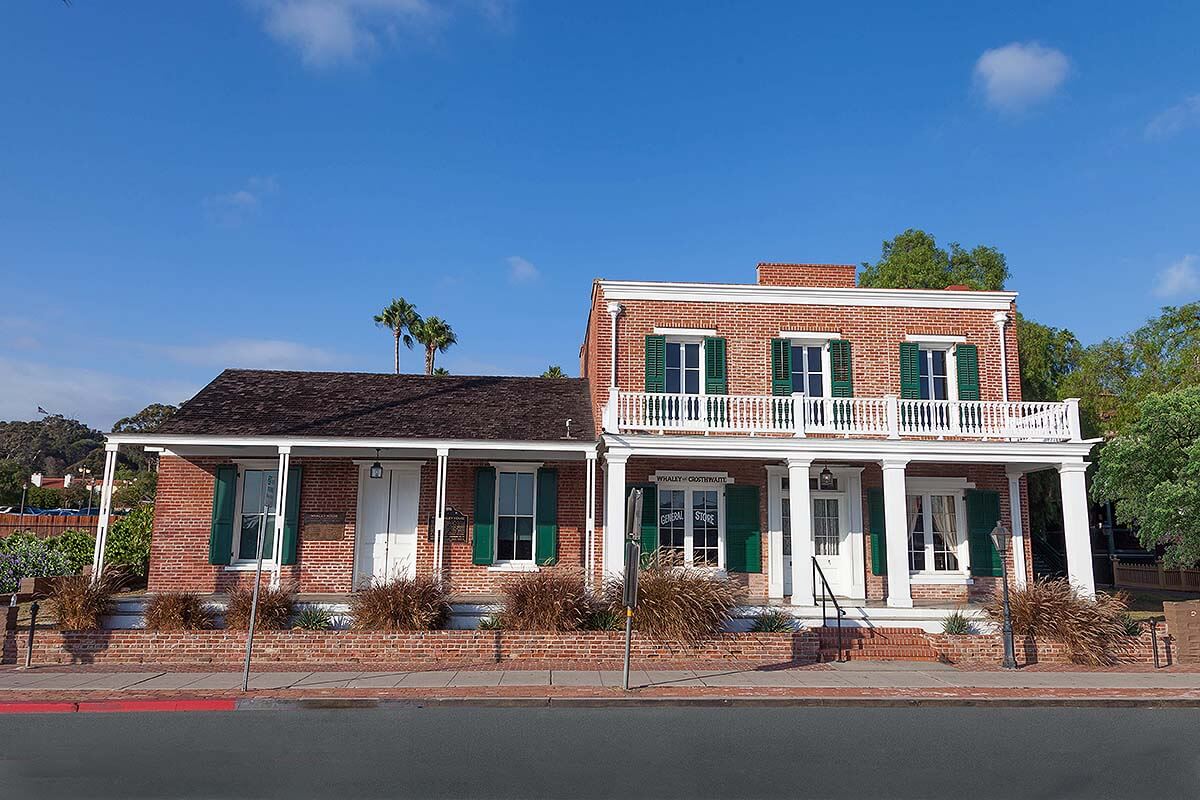
Fixating exclusively on apparitions obscures the building's deep civic importance. In 1869, San Diego County signed a lease to utilize the Whaley front rooms as the official historic courthouse and municipal records repository. Thomas Whaley converted his ground-floor commercial space to house judicial trials, public land filings, and sheriff operations. Local juries sat in the very parlor where tourist groups now listen for phantom footsteps.
That same era turned the upper floor into Southern California's first dedicated theater space. The Tanner Troupe, a traveling theatrical company, leased the upper floor in 1868, mounting English melodramas on improvised redwood stages before rowdy crowds of miners, sailors, and ranchers. Tragedy struck again during this period when troupe actress Thomas Tanner died unexpectedly just days after opening night. The house essentially served as city hall, court of law, variety hall, and morgue all under one cedar-shingle roof.
When county leaders engineered a nocturnal raid in 1871 to sneak public records from Old Town down to the newly founded New Town (modern downtown San Diego), an outraged Thomas Whaley fought back through local petitions. The loss of the courthouse stripped Old Town of political supremacy, accelerating the building's descent into private seclusion.


