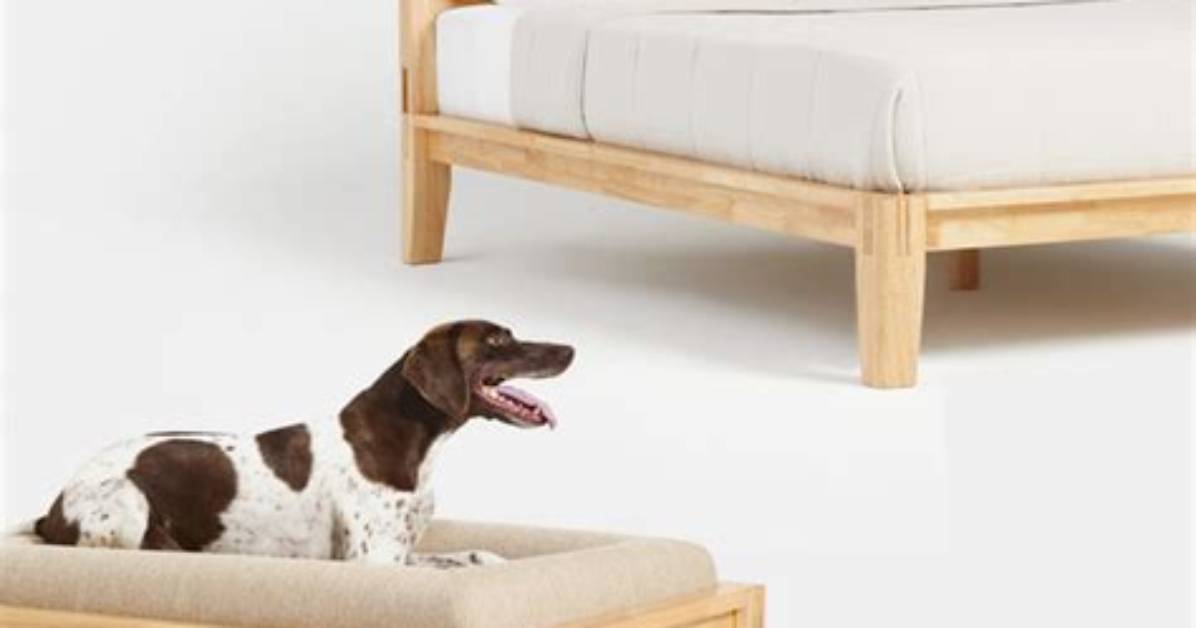
The core structural selling point of the dog bed is its tool-free assembly, utilizing traditional Japanese joinery construction. The corner joints slide into position with tight friction fits, eliminating screws, Allen keys, and loose metal fasteners that strip out over time. It takes less than three minutes to unbox and lock the four timber rails into place.
The solid wood frame is milled from upcycled rubberwood (an environmentally sound hardwood sourced from plantations at the end of their latex-producing lifecycle). The wood feels substantial and grounded. Rubber pads along the bottom rails prevent the structure from sliding across finished white oak floors when a sixty-pound retriever launches onto the cushion. Furthermore, rounded corners reduce the risk of bruised human shins in pitch-dark bedrooms.
However, wood brings unique operational liabilities that synthetic plastic beds avoid. While the surface features an environmentally friendly, scratch-resistant finish that repels surface scuffs from trimmed nails, wood remains wood. If your dog suffers from separation anxiety or displays compulsive teething habits, the exposed rails sit at eye level. Teething puppies can notch softwood or hardwood easily, meaning structural chew resistance depends entirely on the temperament of the dog resting inside it.