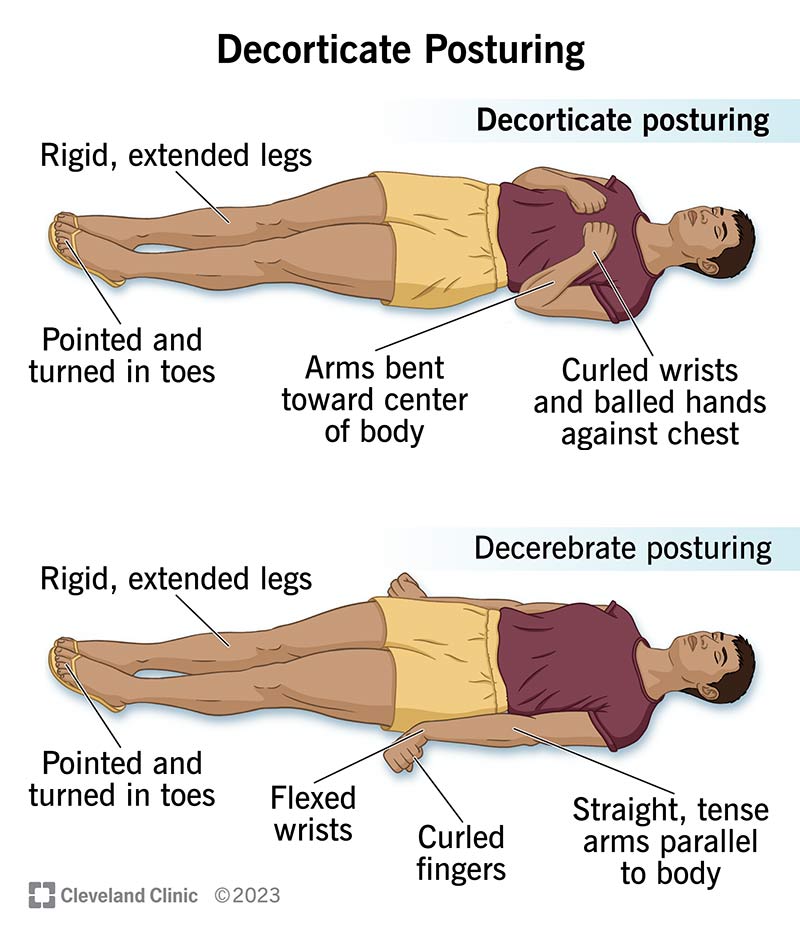
High-speed athletic collisions often produce immediate, dramatic upper-limb freezing. This phenomenon is known as the fencing response. Described by neurobiology researchers, the fencing response occurs immediately after mechanical forces rapidly deform the brainstem during a concussive blow. One arm extends straight outward while the opposite arm flexes at the elbow, mirroring the classic stance of an 18th-century swordsman.
The fencing response frequently creates confusion on sports fields. Observers often mistake it for true decerebrate or decorticate posturing. However, the fencing response is an immediate, transient neurochemical event lasting only seconds to minutes. It reflects an immediate surge of neurochemical discharge and mechanical shock within the midbrain and lateral vestibular nucleus, rather than permanent structural damage or uncal herniation. True decorticate or decerebrate posturing usually emerges over hours as intracranial hematomas, diffuse axonal shearing, or malignant cerebral edema compress tissue. A sustained posture that persists during emergency transport is a medical emergency, whereas a transient fencing posture typically resolves into post-concussive confusion.