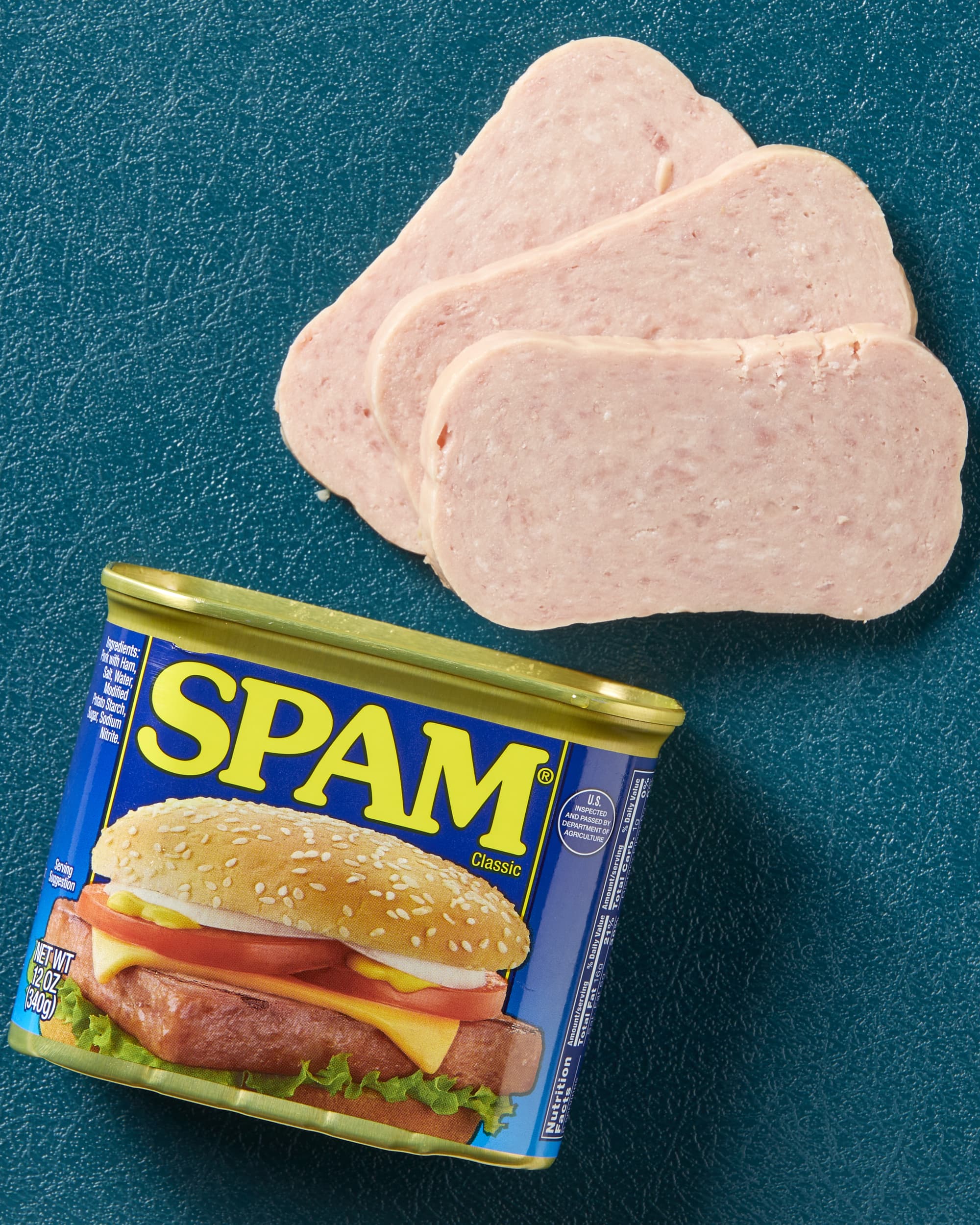
Jay Hormel, son of company founder George A. Hormel, spent the mid-1930s experimenting with canning whole meats without losing moisture. Canned meats of the era were notoriously dry. His team realized that finely mincing the pork shoulder and salt-curing the blend preserved the natural fat droplets, keeping the finished loaf tender after intense thermal processing.
World War II transformed Spam from a domestic Midwest oddity into a global geopolitical necessity. Military logistics officers required proteins that could withstand humid Pacific jungles, freezing European trenches, and transatlantic shipping holds without spoiling. Between 1941 and 1945, the Allied war effort purchased more than 100 million pounds of Spam. American GIs, British civilians enduring strict rationing, and Red Army soldiers all received tins of the salty pork loaf as part of standard military supplies.
Soldiers grew weary of eating it cold out of greasy tins, nicknaming it "ham that failed its physical." Yet that logistical blitz permanently altered global culinary maps. When United States forces established bases across the Pacific, surplus tins flowed into local civilian economies, laying the foundation for beloved regional comfort foods.