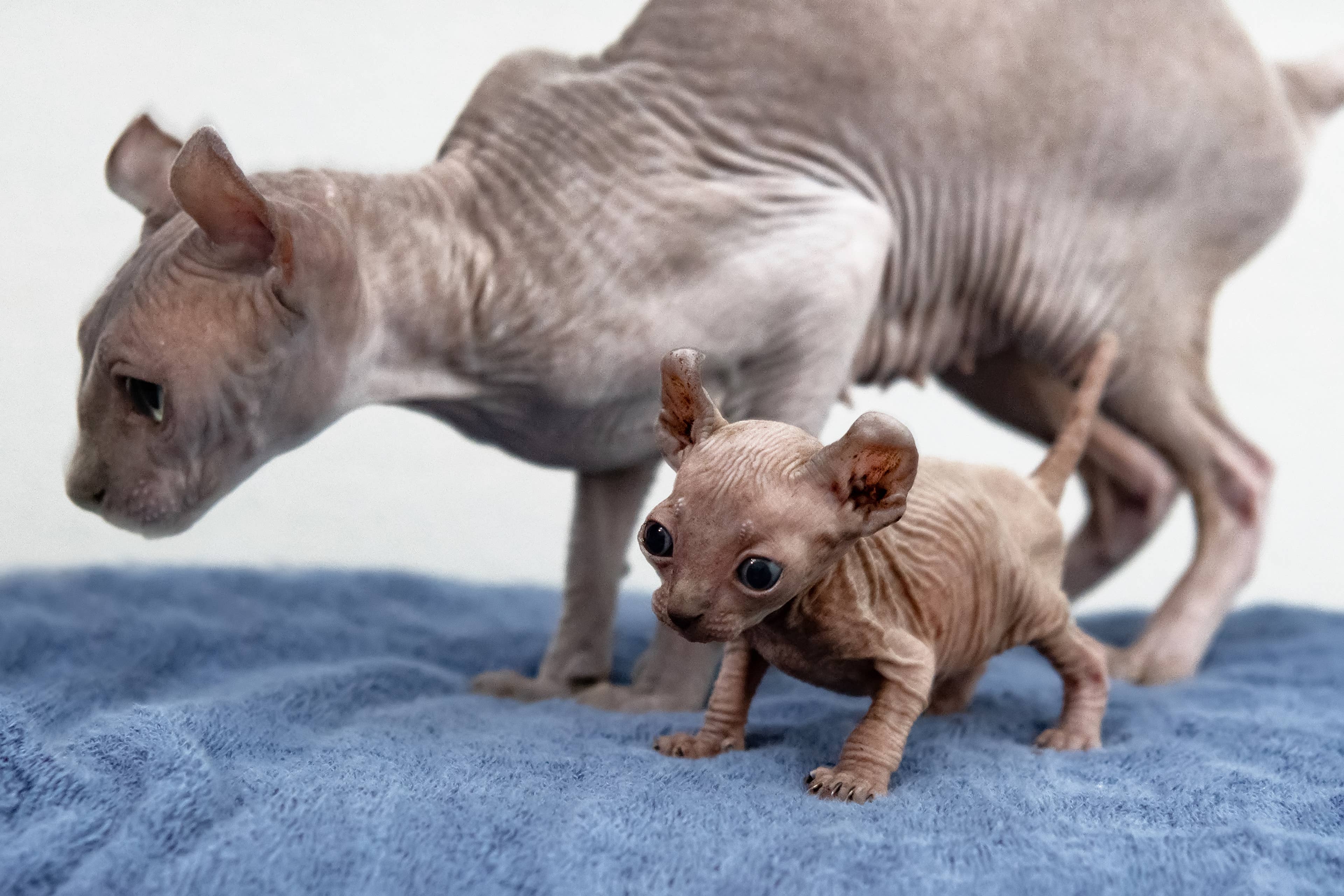
A standard feline relies on its hair shaft to distribute sebum away from the skin surface during routine self-cleaning. A Sphynx possesses no such distribution system. Its sebaceous glands produce oil at normal rates, leaving lipids pooled directly within deep cutaneous folds. Neglecting this buildup leads to brown grease marks across furniture, severe follicular occlusion, and painful secondary Malassezia yeast infections.
A reliable feline grooming routine cannot be treated as optional. Veterinarians recommend warm water baths every 7 to 14 days using a gentle, chlorhexidine- or ketoconazole-based cat shampoo. Human body washes and standard pet soaps strip the acid mantle, provoking a rebound effect where the skin produces even more grease within 48 hours. Between water baths, owners must run unscented, alcohol-free grooming wipes through the neck folds, armpits, and groin daily.
The ears and nail beds demand equal diligence. Sphynx cats lack inner ear canal hair, removing the natural barrier against ambient airborne debris. Earwax accumulates rapidly into a dark, viscous paste that requires bi-weekly flushing with an enzymatic cleanser. Similarly, nail sheaths collect black sebaceous deposits that turn gummy over time. If left uncleaned with damp cotton pads, this residue hardens, inflaming the nail fold and encouraging persistent bacterial paronychia.