Q1: Why doesn't "your" take an apostrophe if it indicates possession?
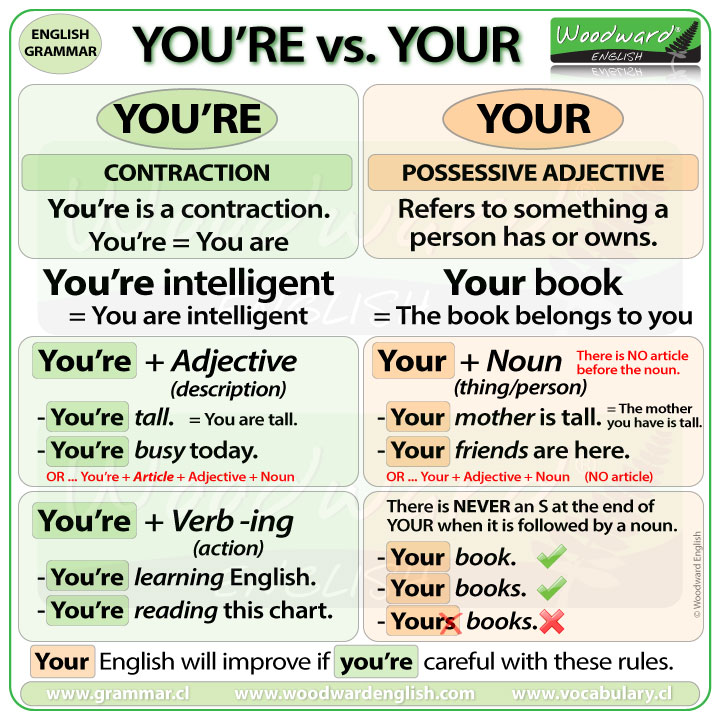
A1: In English, possessive pronouns and determiners, including hers, ours, theirs, its, and your, never use apostrophes to show ownership. Apostrophes indicate possession only for standard nouns (e.g., the manager's desk), whereas contractions use them to mark missing letters.
Q2: Is "yours" ever written with an apostrophe?
A2: No. Writing "your's" is always incorrect. "Yours" is an absolute possessive pronoun and never takes an apostrophe under any circumstance.
Q3: Should I use "your" or "you're" before words ending in -ing?
A3: It depends on sentence structure. If the word is a gerund functioning as a noun of action, use "your" (e.g., "Your signing the document completes the sale"). If the word is part of a continuous verb tense describing what someone is currently doing, use "you're" (e.g., "You're signing the document right now").