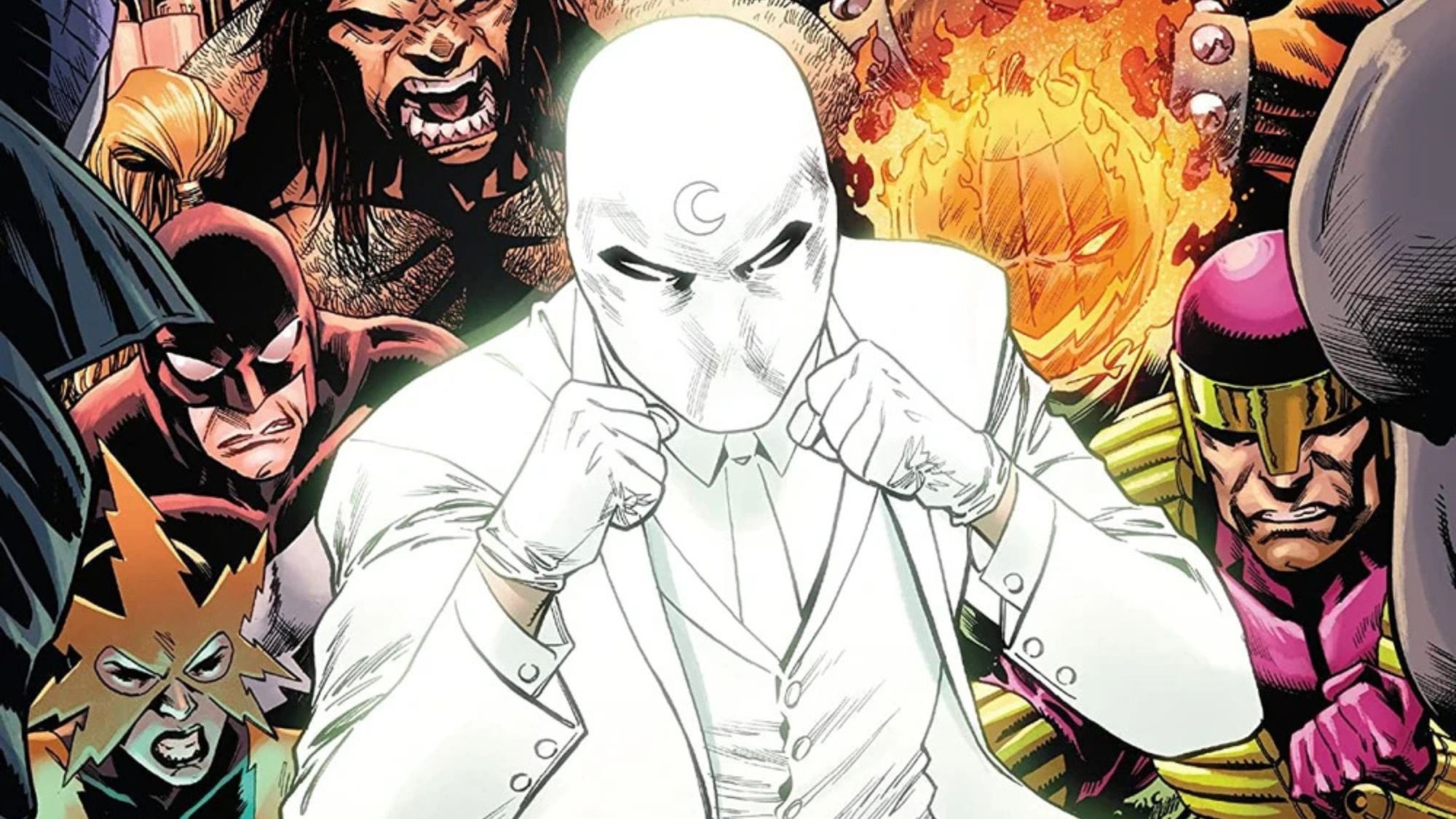
Moon Knight’s depiction of mental health has transformed drastically over five decades. Writers Doug Moench and Don Perlin initially framed Steven Grant and Jake Lockley as mere undercover personas, aliases Spector adopted to infiltrate elite ballrooms and criminal dives. Over time, successive creative teams recognized the dramatic power of treating these identities as legitimate alters resulting from childhood trauma and military stress.
The definitive narrative turning point occurred during writer Jeff Lemire and artist Greg Smallwood’s landmark 2016 run. The storyline placed Spector inside an asylum, questioning whether Khonshu, the Egyptian underworld, and his entire superhero career were elaborate hallucinations masking untreated schizophrenia and DID. Rather than framing his alternate personalities as a weakness to be cured, modern Moon Knight writers portray the alters as an internal collective. Survival requires Spector, Grant, and Lockley to communicate, negotiate, and protect one another.
Jed MacKay’s critically acclaimed comic run further refined this balance. Establishing the "Midnight Mission," MacKay positioned Moon Knight as an urban patron for people who travel under the cover of night. Marc accepts his neurodivergence, Khonshu’s betrayal, and his moral failures, moving forward not as a single cured soldier, but as an assembled council of protectors watching over the vulnerable.