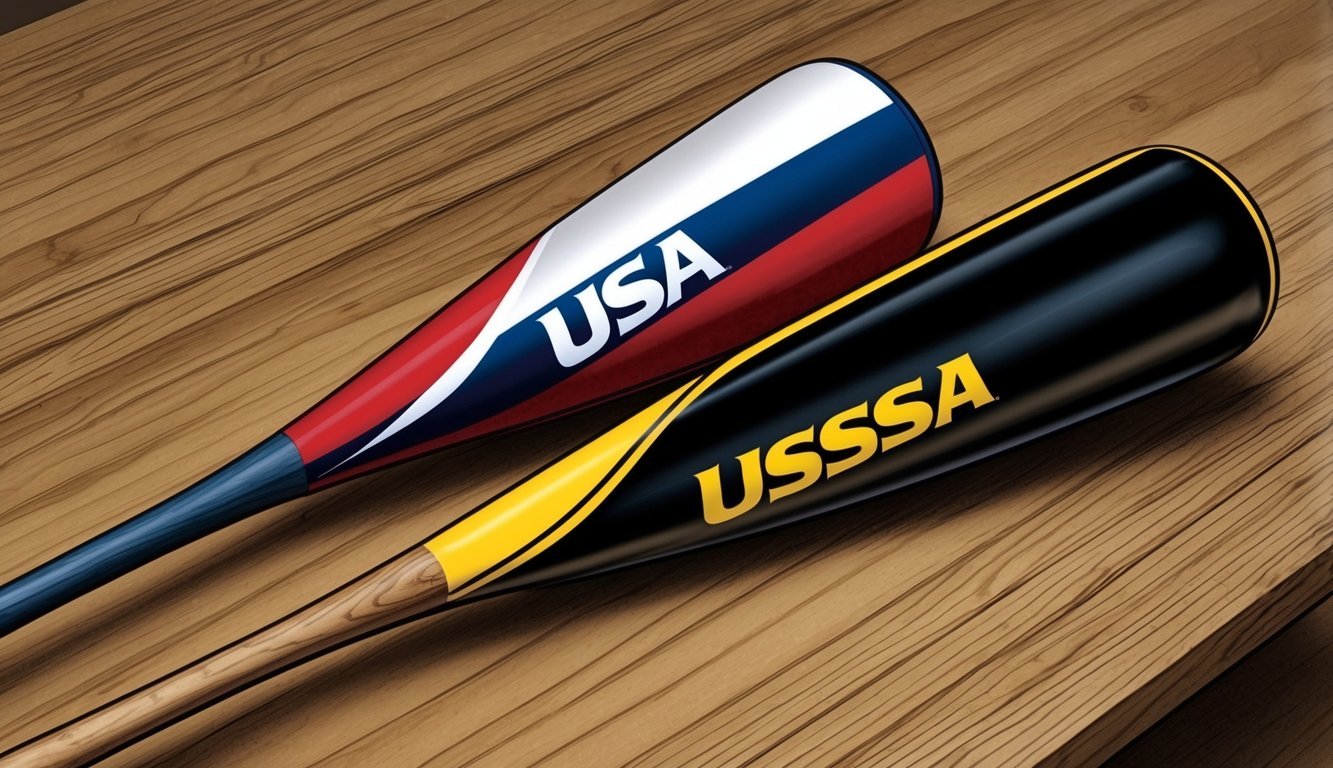
Beyond interior wall thickness, geometry separates these standards. USSSA regulations permit barrel diameters up to 2 3/4 inches, creating a massive surface area commonly known in dugout parlance as the "big barrel." USA Baseball limits maximum barrel width strictly to 2 5/8 inches, forbidding any 2 3/4-inch silhouettes in youth play. That eighth-of-an-inch difference expands the sweet spot outward, boosting contact rates on pitches clipped near the end cap or inside handle.
Material choice further magnifies the difference between composite and alloy barrels:
- Single-Piece Alloy Construction: Standard aluminum alloy barrels hit close to their peak capacity right out of the wrapper. In USA models, heavy alloys keep the bat rigid, ensuring strict compliance with wood-performance tests.
- Two-Piece Multi-Wall Composites: Composite bats weave carbon fibers that naturally soften and loosen over several hundred swings. While USSSA composites expand their trampoline effect as the resin breaks down, USA composites are engineered to prevent internal delamination from boosting the exit velocity above legal thresholds.
- Drop Weight Distributions: Both standards permit lightweight variations, including -10 and -12 drop weights (length in inches minus weight in ounces) for smaller swingers, stepping down to -8 and -5 models as athletes mature. A USSSA bat swinging at a -10 drop delivers markedly higher pop than a USA bat of identical mass due solely to dynamic barrel flex.