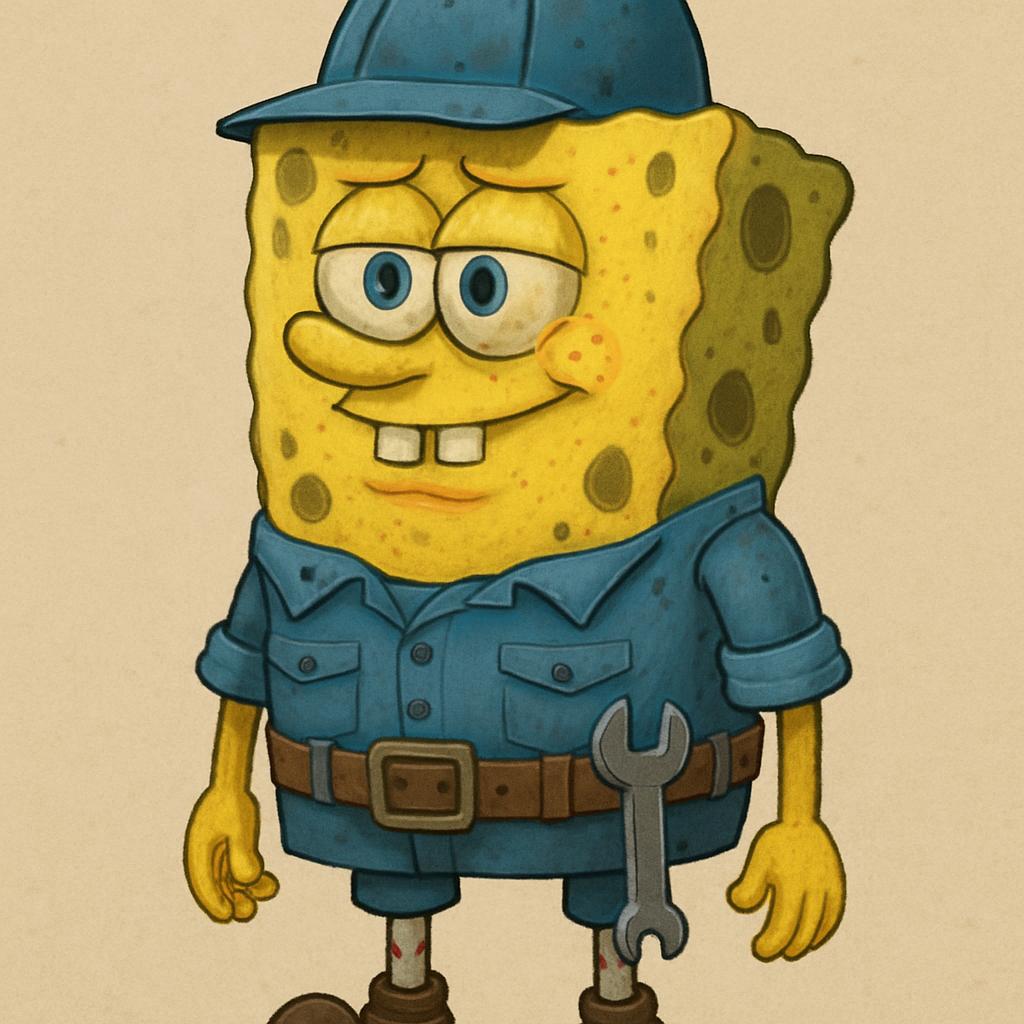
Stephen Hillenburg did not invent the Krusty Krab out of thin air. Before studying marine biology and animation, he worked as a fry cook and dishwasher at a seafood restaurant in Dana Point, California. That firsthand exposure to back-of-house exhaustion informed the texture of the series. SpongeBob’s obsession with flipping Krabby Patties is not simply an idiosyncratic quirk; it represents the ultimate corporate fantasy of the self-exploiting wage earner.
Eugene H. Krabs embodies capital extraction in its purest, most unapologetic form. In the season two episode "Bossy Boots," Mr. Krabs proudly reveals pay stubs showing employees charged for their own labor. In "Squid's Day Off," he charges staff for breathing, standing, and existing on premises. These were not abstract gags. They exaggerated very real restaurant-industry practices: wage theft, off-the-clock preparation, and the psychological trap of substituting institutional pride for adequate financial compensation.
SpongeBob functions as the ideal alienated laborer because he lacks class consciousness. He views hundreds of consecutive "Employee of the Month" awards as crowning life achievements while living in modest quarters, entirely unaware that his surplus value fuels Mr. Krabs' literal mattress stuffed with greenbacks. His neighbor, Squidward Tentacles, represents the exhausted counterweight: the burned-out worker trapped in retail survival who understands his labor is stolen but lacks the structural leverage to change his circumstances.