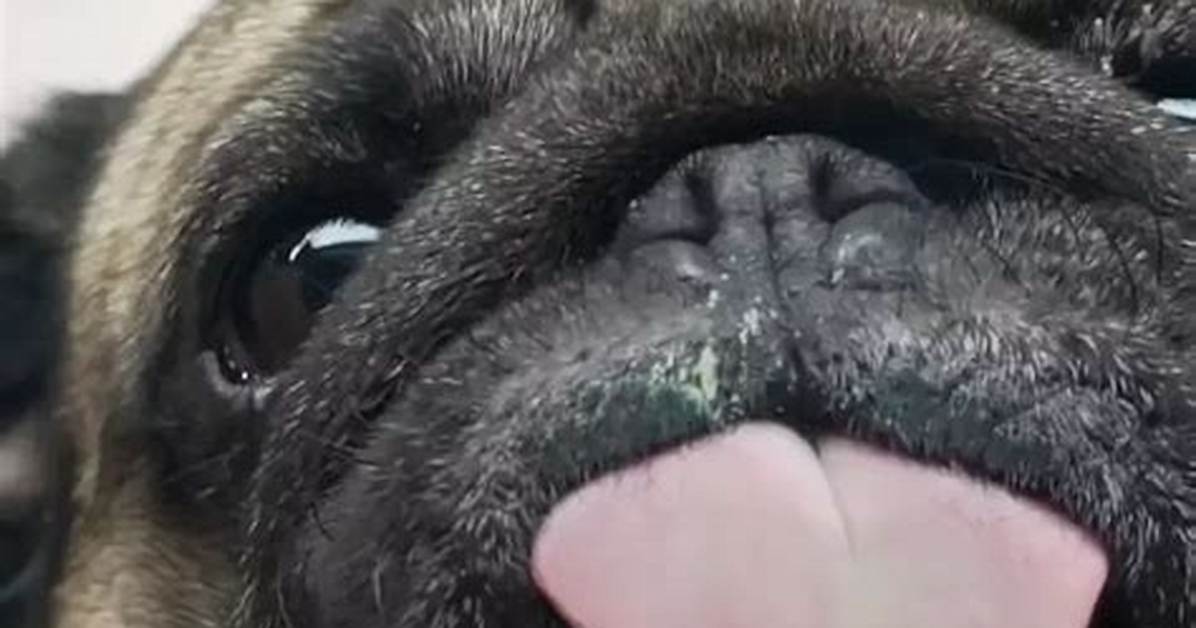
The staging required to produce the clip is remarkably low-tech. A filmmaker sets up a camera on a tripod, places a clean pane of picture-frame glass or Plexiglas directly between the lens and the dog, and smears a dab of peanut butter or baby food across the surface facing the animal. When the dog attacks the treat, the camera captures an angle that human eyes rarely see in daily life: the underside of a canine tongue flattening in extreme close-up.
Pugs make the ideal subject for this camera trick. Their brachycephalic facial structure means their nostrils, jowls, and eyes press flush against the glass surface all at once. Breeds with elongated muzzles, like Collies or German Shepherds, lose the illusion because their snout forces their eyes out of focus. A pug's naturally furrowed forehead and bulging gaze remain sharply defined across the entire focal plane, selling the comedic effect instantly.
By the time YouTube user communities began uploading dedicated edits in September 2015, the footage had decoupled from its original production context. It became an open-source visual currency. Office workers left it running on colleagues' unlocked monitors as a harmless workplace prank. College students loaded it onto classroom projectors during lecture breaks. The gag succeeded because it required zero cultural context or language comprehension to enjoy.