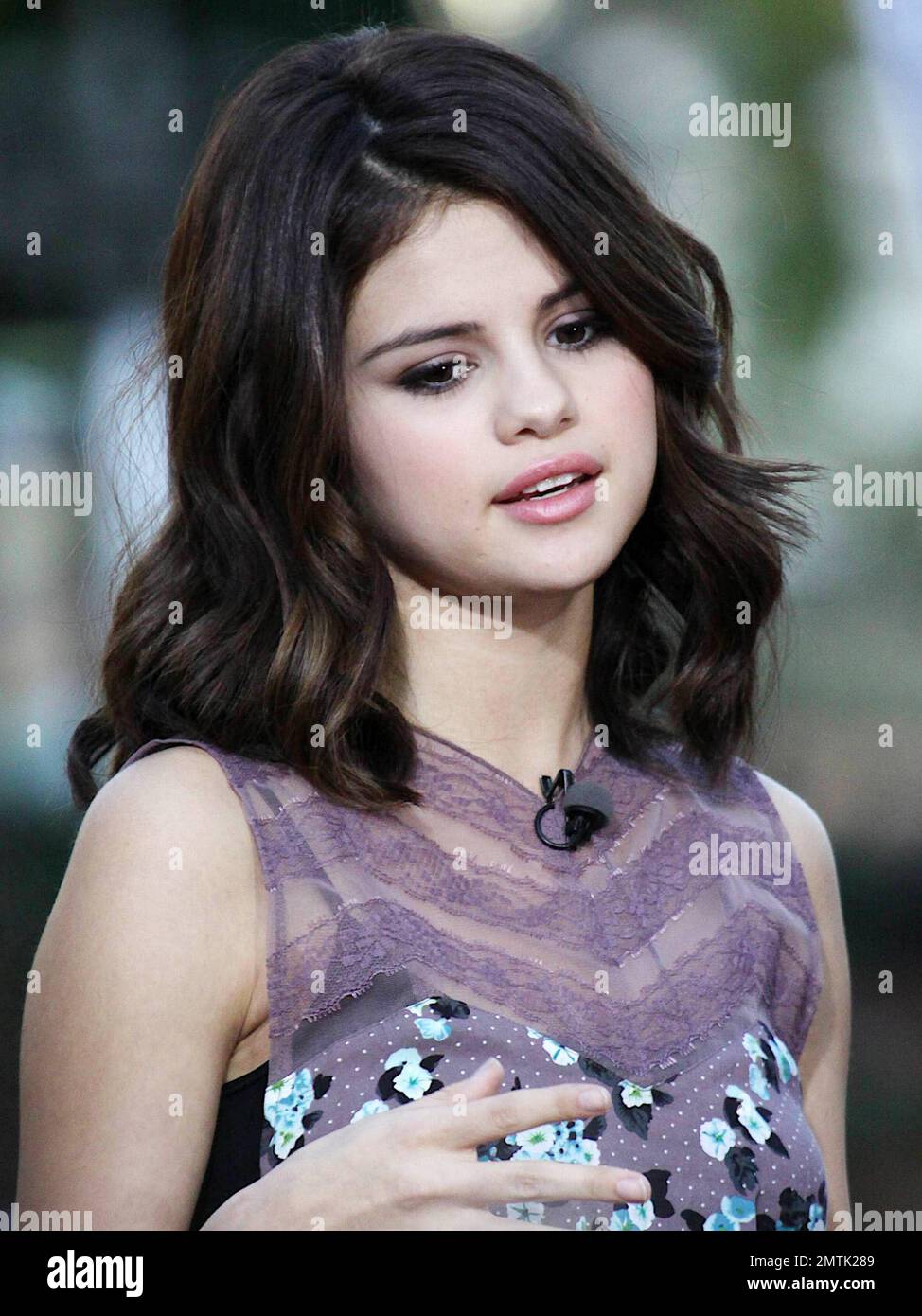
The turning point arrived around 2011. Gomez closed out her Disney contract and launched an ambitious musical transition with Selena Gomez & the Scene. She phased out frayed denim and debuted Old Hollywood silhouettes, beginning with a liquid-silk crimson gown by Reem Acra at the 2011 Vanity Fair Oscar Party. Stylists like Basia Richard and later Kate Young helped pivot her visual language toward architectural tailoring, sharp necklines, and clean color blocking.
Her emergence as a bona fide fashion icon solidified at the 2013 MTV Video Music Awards, where she wore an ink-navy Atelier Versace gown featuring an exposed bustier and sheer lace paneling. The moment generated global headlines. By the time Nicolas Ghesquière named her the face of Louis Vuitton in 2016, Gomez had earned legitimate runway credibility. Her appearances at the Met Gala, ranging from custom Vera Wang in 2015 to Coach in 2018, demonstrated that she could effortlessly execute complex couture concepts without losing her approachable public identity.
| Era & Timeframe | Defining Wardrobe Signatures | Industry Impact & Context |
|---|---|---|
| Childhood & Barney(2002, 2006) | Overalls, basic cotton tees, sneakers, unstyled natural hair. | Standard child-performer wardrobe; completely removed from retail fashion or corporate branding. |
| Disney & Alex Russo(2007, 2010) | Layered long-sleeve tees, Converse, studded accessories, patterned tunics. | Defined mainstream mall culture for millions of global pre-teens during Disney Channel's golden era. |
| Pop Crossover & Runway(2011, 2018) | Atelier Versace, Louis Vuitton leather, Coach gowns, high-slit slips. | Broke out of teen stardom; formed formal partnerships with major European luxury houses. |
| Beauty Mogul & Prestige TV(2019, 2026) | Custom Valentino, Giambattista Valli, tailored suiting, jewel-toned velvets. | Body-positive high fashion; corporate billionaire authority combined with prestige acting recognition. |